


16-07-2026
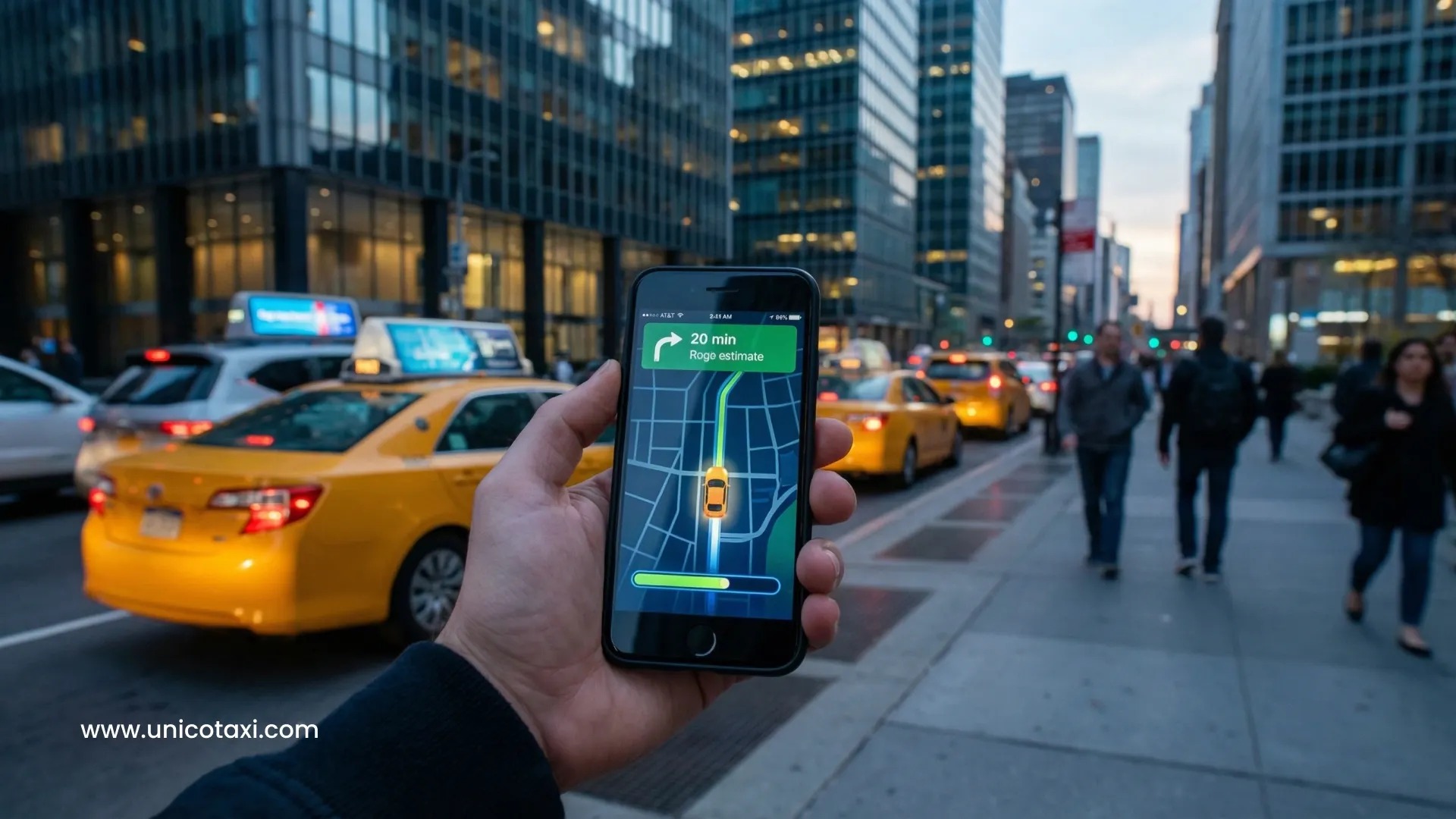
If you operate a taxi company, chauffeur service, airport transfer business, or ride-hailing platform, taxi dispatch software is the technology that manages ride requests, assigns drivers, tracks vehicles in real time, and coordinates every trip from booking to completion. Instead of relying on phone calls, spreadsheets, or manual driver coordination, dispatch software automates the entire process, helping transportation businesses reduce response times, improve fleet efficiency, and deliver a better passenger experience.
The transportation industry has changed dramatically over the past decade. Customers no longer judge a taxi company solely by its drivers or pricing. They expect to book rides through a mobile app, receive accurate arrival estimates, track vehicles in real time, and complete payments digitally. At the same time, fleet operators must manage growing driver networks, monitor vehicle availability, optimize routes, and respond quickly during peak demand.
Meeting these expectations manually is becoming increasingly difficult.
This is why taxi dispatch software has become one of the most important investments for modern transportation businesses.
Whether you're launching a new ride-hailing startup or modernizing an established taxi company, understanding how dispatch software works is the first step toward building a more efficient and scalable operation.
Not long ago, most taxi companies managed bookings through a dispatcher sitting beside a telephone.
Customers called the office, operators wrote booking details on paper, and drivers received instructions over radio communication. While this process served the industry for many years, it often resulted in delayed pickups, communication errors, inefficient vehicle allocation, and limited visibility into daily operations.
Today's transportation businesses operate in a very different environment.
Passengers expect immediate confirmations, live driver tracking, cashless payments, and quick response times comparable to leading ride-hailing platforms.
For fleet operators, manually coordinating dozens—or even hundreds—of drivers throughout the day has become both inefficient and difficult to scale.
A cloud-based taxi dispatch system solves these operational challenges by bringing bookings, drivers, dispatchers, and customers together within a single digital platform.
Instead of reacting to every booking manually, operators gain real-time visibility into fleet movements while intelligent dispatch systems automatically assign rides to the most suitable drivers.
The result is faster service for passengers and smoother operations for businesses.
Taxi dispatch software is a centralized platform that helps transportation businesses manage every stage of a customer's journey.
From the moment a passenger requests a ride until payment is completed, the software coordinates multiple activities simultaneously.
When a booking is received, the platform identifies available drivers nearby, assigns the trip based on predefined business rules, calculates routes, shares trip information with the driver, monitors the journey through GPS, and updates both the passenger and dispatcher throughout the ride.
Rather than functioning as a single application, dispatch software usually combines several connected systems, including:
Passenger booking applications
Driver mobile apps
Dispatcher dashboard
Fleet management tools
Administrator control panel
GPS tracking
Payment processing
Reporting and business analytics
Each component works together to simplify operations while reducing manual effort across the organization.
For businesses handling hundreds of rides every day, this level of automation creates measurable improvements in efficiency.
Also Read: The Complete Taxi Dispatch Software Guide for 2026
Although passengers experience dispatch software as a simple booking application, a great deal happens in the background within just a few seconds.
Imagine a traveler arriving at an airport.
They open the taxi booking app and request transportation to their hotel.
Immediately, the system begins evaluating available drivers nearby.
It checks their current locations, availability, estimated arrival times, vehicle categories, and dispatch rules configured by the operator.
The software then assigns the booking to the most appropriate driver while simultaneously notifying both the passenger and dispatcher.
As the journey progresses, GPS tracking continuously updates vehicle location, allowing passengers to monitor their ride in real time.
Upon reaching the destination, the system calculates the fare, processes payment, records trip history, and generates operational data for future reporting.
All of this occurs with minimal manual intervention.
For transportation businesses, this automation significantly reduces dispatcher workload while helping drivers receive bookings faster and passengers enjoy a smoother experience.
Despite its name, taxi dispatch software supports far more than traditional taxi companies.
Today's mobility businesses operate across multiple transportation segments, many of which require the same core technology.
For example, airport transfer companies depend on dispatch systems to schedule pickups, monitor flight arrivals, and coordinate drivers efficiently.
Corporate transportation providers use dispatch platforms to manage executive travel, recurring employee rides, and centralized billing for business clients.
Chauffeur services rely on dispatch software to organize premium bookings while maintaining consistent communication between drivers and passengers.
Car rental businesses with chauffeur services, shuttle operators, medical transportation providers, and regional ride-hailing startups also benefit from centralized dispatch technology.
Although each business model has unique operational requirements, they all share one common objective—moving passengers efficiently while maintaining complete visibility over daily operations.
Modern dispatch platforms provide the flexibility to support these different transportation models without requiring separate software for each service.
Speed has become one of the biggest competitive advantages in the transportation industry.
When passengers request a ride, they expect confirmation almost instantly.
Long waiting times often result in cancelled bookings and dissatisfied customers.
Real-time dispatch technology addresses this challenge by continuously monitoring vehicle locations and assigning rides to the most appropriate available driver.
Instead of manually contacting drivers one by one, dispatchers can oversee the entire fleet from a centralized dashboard while the system handles routine booking assignments automatically.
This not only improves response times but also reduces driver idle time, increases completed trips, and creates a more balanced distribution of bookings across the fleet.
For growing transportation businesses, these operational improvements often translate into higher customer satisfaction and better revenue opportunities.
One of the biggest misconceptions about taxi dispatch software is that it's designed only for large taxi companies managing hundreds of vehicles. In reality, businesses of every size can benefit from modern dispatch technology. Whether you're operating a fleet of ten vehicles or managing transportation across multiple cities, the same operational challenges eventually arise. Drivers need faster trip assignments, customers expect quicker pickups, dispatchers require better visibility, and business owners need reliable reporting to make informed decisions. Taxi dispatch software is particularly valuable for:
Bonus Read: 10 Reasons Taxi Business Must Invest in Taxi App Development
Every transportation company reaches a point where manual coordination begins limiting growth.
Bookings increase.
More drivers join the fleet.
Customers expect quicker service.
Dispatchers become overwhelmed.
Without the right technology, small operational issues gradually become larger business challenges.
AI-powered taxi dispatch software helps eliminate many of these everyday problems.
Instead of manually assigning every ride, intelligent automation ensures that bookings are distributed efficiently based on driver availability, location, vehicle category, and business rules.
Communication also becomes significantly smoother.
Drivers receive trip details instantly through their mobile application instead of relying on repeated phone calls or radio conversations.
Passengers receive booking confirmations, estimated arrival times, driver information, and live vehicle tracking without contacting customer support.
At the management level, business owners gain complete visibility into daily operations.
Rather than relying on assumptions, they can monitor completed trips, booking trends, fleet utilization, revenue performance, driver productivity, and customer demand through real-time dashboards and reports.
These insights help operators identify opportunities for improvement while supporting better business decisions.
Although every transportation business has unique requirements, the advantages of dispatch software are remarkably consistent across the industry.
One of the most noticeable improvements is faster response time.
Because the system automatically identifies suitable drivers, passengers spend less time waiting for confirmation and drivers spend less time searching for their next trip.
Fleet utilization also improves.
Instead of some drivers remaining idle while others receive most bookings, intelligent dispatch creates a more balanced distribution of trips, helping maximize productivity across the entire fleet.
Customer satisfaction naturally increases as well.
Passengers appreciate accurate pickup estimates, live tracking, digital payments, and transparent communication throughout their journey.
From an operational perspective, businesses often benefit from reduced administrative workload because routine tasks such as booking confirmations, trip assignments, invoicing, and ride tracking are largely automated.
These efficiencies allow transportation companies to focus more on improving customer experience and expanding their services rather than managing repetitive administrative work.
AI Taxi Dispatch Software continues evolving as artificial intelligence becomes more integrated into transportation technology.
Rather than simply assigning the nearest available driver, AI-powered dispatch systems analyze multiple factors before making assignment decisions.
These may include:
Current traffic conditions.
Driver availability.
Historical demand patterns.
Estimated travel times.
Vehicle category.
Customer preferences.
Peak-hour booking trends.
By evaluating these variables simultaneously, AI helps improve dispatch accuracy while reducing passenger waiting times and unnecessary driver travel.
Artificial intelligence also supports predictive demand forecasting.
Instead of reacting to booking requests after they occur, operators can position drivers in high-demand areas before demand begins increasing.
For fleet owners, this creates measurable improvements in both operational efficiency and customer satisfaction.
As mobility technology continues advancing, AI-powered dispatch is expected to become a standard capability rather than an optional feature.
Not every dispatch platform is designed with long-term business growth in mind.
Some solutions focus only on basic booking management, while others provide a complete operational ecosystem.
When evaluating software providers, transportation businesses should look beyond feature lists.
Ask practical questions.
Can the platform scale as your fleet grows?
Does it support passenger, driver, dispatcher, and admin applications?
Is AI-powered dispatch available?
Can it manage airport transfers, corporate bookings, chauffeur services, or multiple service categories?
How frequently is the software updated?
What level of technical support is provided after deployment?
Perhaps most importantly, choose a technology partner that understands transportation—not simply software development.
Industry knowledge often makes the difference between a platform that works in theory and one that performs reliably in everyday operations.
Taxi dispatch software has become much more than a booking management tool.
It now serves as the operational foundation for modern transportation businesses.
By connecting passengers, drivers, dispatchers, and fleet managers through one intelligent platform, dispatch software helps businesses improve efficiency, deliver better customer experiences, and scale confidently in an increasingly competitive market.
Whether you're operating a local taxi company, managing airport transfers, building a chauffeur service, or launching the next ride-hailing platform, investing in the right dispatch technology can significantly improve both daily operations and long-term business performance.
As customer expectations continue evolving and AI reshapes the transportation industry, businesses that embrace modern dispatch solutions will be better positioned to compete, grow, and adapt to future mobility trends.
Book a Free Demo today and discover how UnicoTaxi can simplify your dispatch operations and accelerate your business growth.
Taxi dispatch software is a digital platform that automates ride bookings, driver assignment, GPS tracking, payment processing, and fleet management for taxi companies and ride-hailing businesses.
It receives ride requests, identifies the most suitable available driver, assigns the trip automatically, tracks the journey through GPS, processes payments, and records trip data for reporting and business analysis.
Taxi companies, airport transfer providers, chauffeur services, corporate transportation businesses, ride-hailing startups, and fleet operators can all benefit from dispatch software.
The software helps reduce manual work, improve dispatch efficiency, shorten passenger waiting times, increase fleet utilization, simplify business management, and enhance customer satisfaction.
Yes. Modern dispatch platforms can manage taxi bookings, airport transfers, chauffeur services, corporate transportation, and other mobility services through one centralized system
Bala
Share Article


Bala serves as a Digital Content Specialist at UnicoTaxi, crafting comprehensive guides and resources tailored for taxi business owners and entrepreneurs. Drawing on extensive experience in mobility and transport tech, he transforms industry insights into practical, actionable strategies for launching, scaling, and thriving in taxi operations.


Get a Fast Response from our Sales Team