


14-06-2026
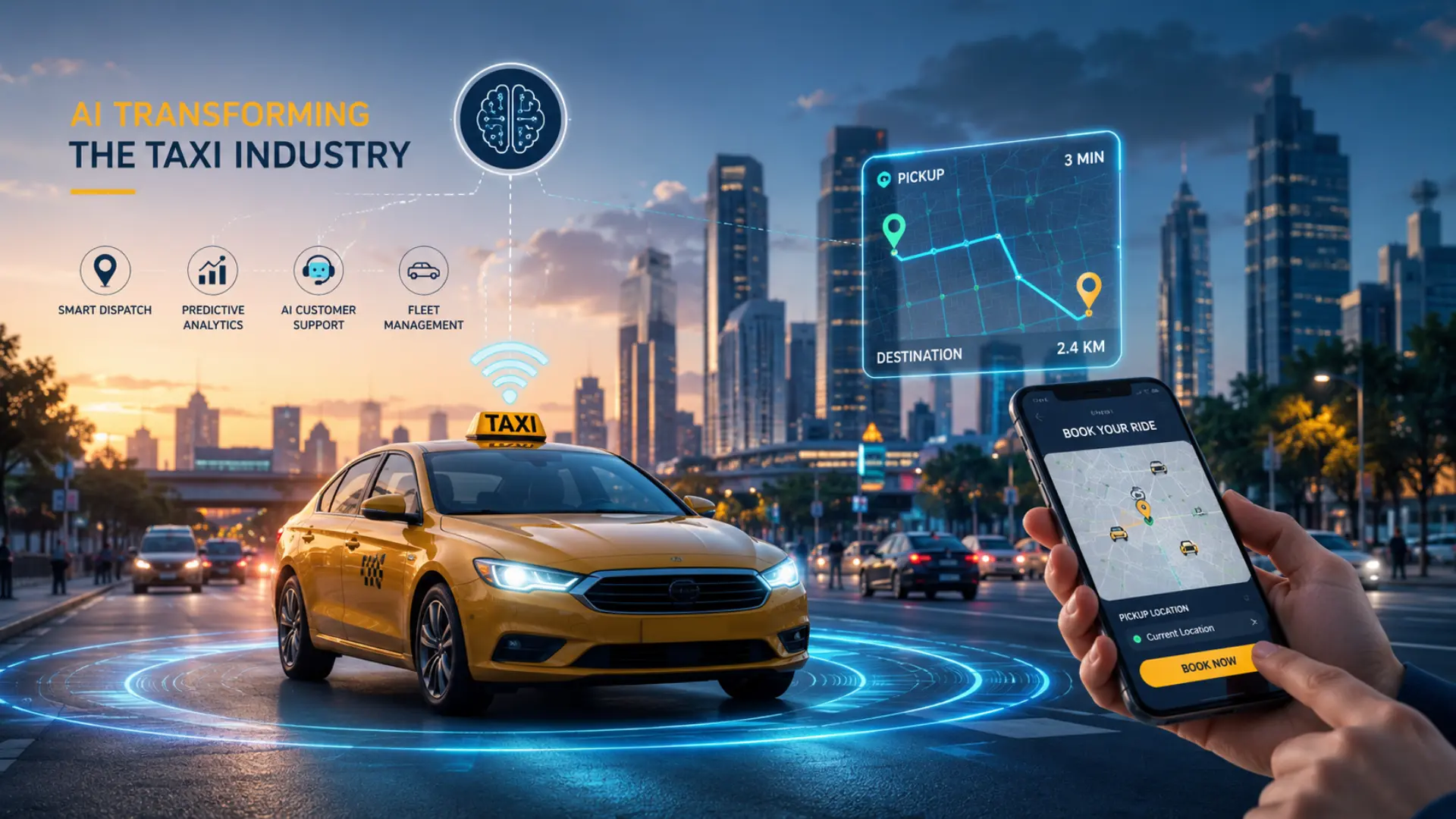
Artificial Intelligence (AI) is no longer a futuristic concept in transportation—it is becoming a competitive advantage for taxi companies worldwide. As customer expectations continue to evolve, AI-powered technologies are helping taxi operators improve efficiency, reduce costs, increase bookings, and deliver a better passenger experience.
For taxi business owners planning to launch or scale their operations, understanding AI's impact is becoming just as important as choosing the right vehicles or dispatch software.
Traditional dispatching often relies on manual decision-making, which can result in longer wait times and inefficient driver allocation.
AI-powered dispatch systems analyze multiple factors in real time, including:
The result is faster ride assignment, reduced idle time, and improved customer satisfaction.
One of AI's biggest advantages is its ability to predict future demand using historical data and real-time market conditions.
AI can identify:
This enables taxi companies to position vehicles strategically before demand occurs, increasing completed trips and revenue opportunities.
AI helps transportation businesses optimize pricing strategies based on:
Unlike traditional flat-rate pricing, AI-driven pricing models can help operators maximize profitability while maintaining competitive and transparent fare structures.
Modern customers expect immediate responses. AI-powered chatbots and virtual assistants can provide 24/7 customer support without requiring additional staffing.
These systems can assist with:
By automating repetitive customer interactions, taxi companies can reduce support costs while improving response times.
AI can analyze booking patterns and payment activities to identify suspicious behavior before it impacts the business.
Benefits include:
As digital payments continue to dominate transportation services, AI-driven security systems will become increasingly important.
Unexpected vehicle breakdowns can lead to lost revenue and poor customer experiences.
AI-powered fleet management systems can monitor:
Predictive maintenance helps fleet operators identify potential issues before they become expensive repairs, reducing downtime and extending vehicle lifespan.
AI allows taxi companies to better understand customer behavior and preferences.
Advanced systems can analyze:
This data enables operators to offer personalized promotions, loyalty rewards, and customized customer experiences that encourage repeat bookings.
The next generation of taxi services is expected to integrate with voice assistants and smart devices.
Customers may increasingly book rides using voice commands through smartphones, smart speakers, connected vehicles, and wearable devices.
Taxi companies that embrace AI-driven booking experiences early will be better positioned to meet future consumer expectations.
As the transportation industry evolves, software platforms must evolve as well.
Modern taxi operators require more than booking management—they need intelligent tools that help them make faster and smarter business decisions.
UnicoTaxi is committed to helping taxi companies stay ahead of industry changes by supporting advanced automation, intelligent dispatching capabilities, real-time analytics, operational insights, and scalable technology infrastructure designed for future AI integrations.
By combining proven taxi dispatch technology with emerging innovations, taxi operators can improve efficiency, reduce operational costs, and create better experiences for both passengers and drivers.
AI will not replace taxi companies—but taxi companies that leverage AI will outperform those that do not.
Over the next five years, Artificial Intelligence is expected to become a core component of transportation operations, influencing everything from dispatching and pricing to customer service and fleet management.
For entrepreneurs entering the taxi industry in 2026, adopting AI-enabled technology from the beginning can create a significant competitive advantage and position the business for long-term growth.
Bala
Share Article


Bala serves as a Digital Content Specialist at UnicoTaxi, crafting comprehensive guides and resources tailored for taxi business owners and entrepreneurs. Drawing on extensive experience in mobility and transport tech, he transforms industry insights into practical, actionable strategies for launching, scaling, and thriving in taxi operations.


Get a Fast Response from our Sales Team