


11-08-2026
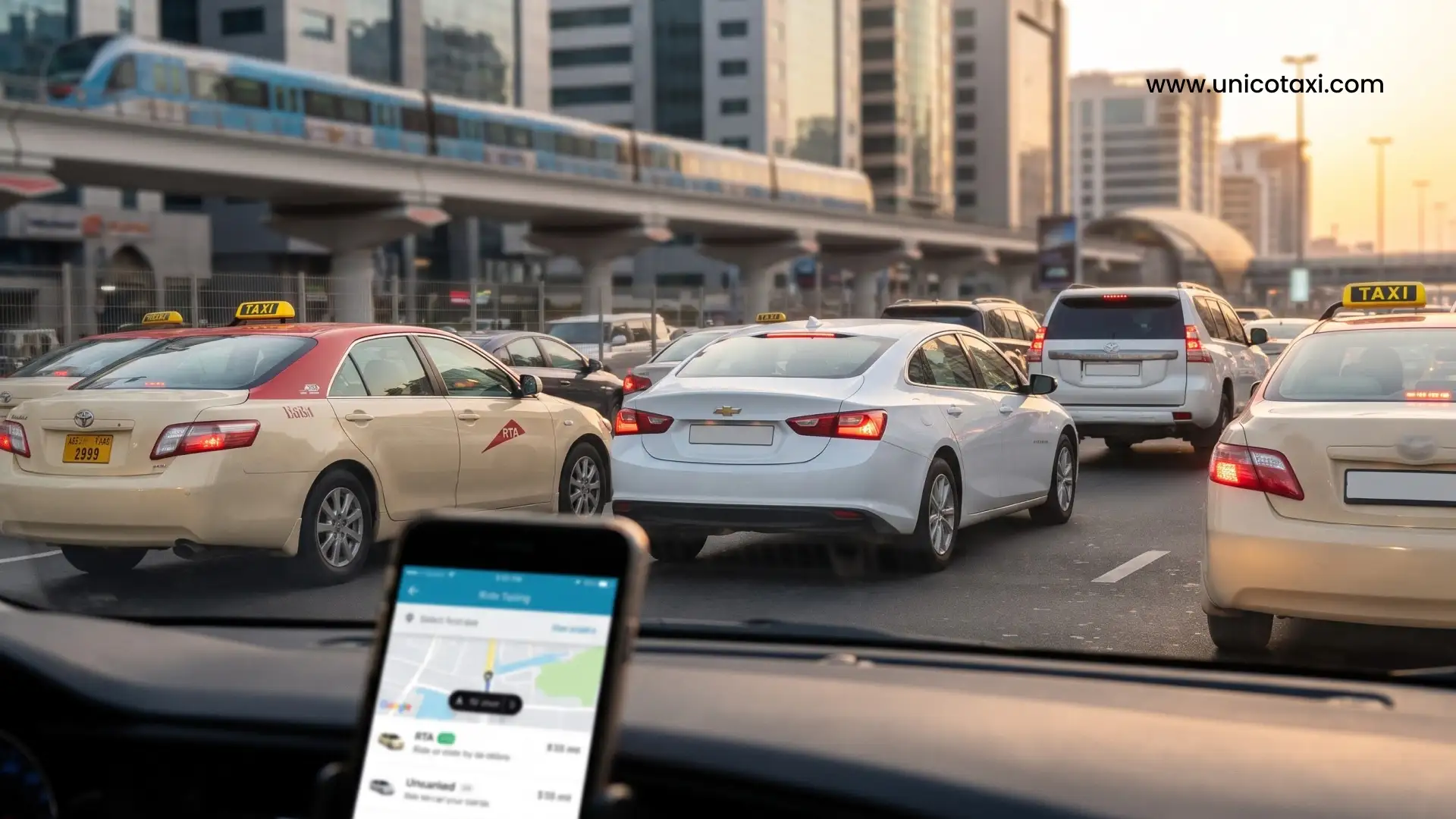
Dubai has built a highly digital transportation environment where customers can book different taxi categories through mobile applications.
RTA's current taxi services include regular, family, female, People of Determination, airport, and Safe Hands taxi options. Its official services also allow taxi bookings through RTA smart apps and partner apps.
This tells new mobility entrepreneurs something important:
A successful taxi platform needs to support different customer needs—not just basic point-to-point transportation.
A modern platform should be capable of handling multiple vehicle categories, booking types, payment methods, and operational rules.
Careem helped normalize the idea that booking a taxi or private ride could be handled through a smartphone.
Its current UAE ride experience includes ride selection, real-time tracking, secure payments, and both immediate and scheduled booking options.
For Dubai's Hala service, customers can book taxis through the Careem app, select pickup and destination points, choose a vehicle type, select payment, and review the estimated fare before confirming.
This creates a customer journey that feels simple:
Open app → enter destination → choose ride → confirm → track → pay.
For an entrepreneur building a Careem-like app, that simplicity should be the starting point—not the finishing point.
One of the biggest mistakes new mobility entrepreneurs can make is treating transportation software as a standalone technology product.
Taxi operations are regulated businesses.
RTA maintains licensing legislation covering transportation and vehicle-rental activities in Dubai, including regulations and implementing bylaws related to transportation by and rental of vehicles.
RTA's current service information also shows that professional driver requirements and operating conditions apply to taxi and luxury transportation businesses. For example, certain driver permits require documentation and testing, and RTA states that a professional driver permit is tied to the company under which the driver is registered.
Therefore, entrepreneurs planning to launch a Careem Clone App should think about compliance from the beginning.
Your software should be configurable enough to support the operational rules of the market in which you intend to operate.
Entrepreneurs often search for a "Careem Clone" because they like the simplicity and popularity of the Careem experience.
That's understandable.
But the goal shouldn't be to duplicate Careem's branding, proprietary design, or business identity.
Instead, study the product principles that make a modern ride-hailing app useful.
These include:
Passengers should be able to request a ride with minimal steps.
GPS and mapping should make pickup and drop-off locations easy to understand.
Customers want to know where their driver is and when the vehicle is likely to arrive.
Passengers should have a clear understanding of the fare or fare estimate before confirming where applicable.
Modern mobility platforms should support convenient digital and offline payment workflows according to the market.
Not every customer needs an immediate ride. Scheduled booking is particularly important for airport transfers, business travel, events, and planned journeys.
Careem currently supports immediate bookings and scheduled bookings, although availability can vary by service and location.
Careem's evolution also demonstrates the value of building technology that can expand beyond a single transportation service.
Its current UAE offering includes rides, taxis, bikes, car rental, and other services, while its broader platform has evolved into a multi-service "everything app."
For a startup, this doesn't mean you need to launch ten services on day one.
In fact, that could make the business unnecessarily complicated.
Instead, build a technology foundation that can expand later.
You might start with:
Taxi Booking → Ride-Hailing → Scheduled Rides → Corporate Transport → Delivery → Additional Mobility Services
A scalable backend and modular admin dashboard make this expansion easier.
If you're considering a Careem Clone script, focus on the core ecosystem rather than just the passenger application.
The customer-facing application should support:
Drivers need a separate experience for:
The business owner needs centralized control over:
This three-sided architecture—customer, driver, and admin—is the foundation of a scalable ride-hailing business.
The next generation of Careem-like taxi platforms will need more than basic GPS and dispatch.
Artificial Intelligence can help operators make transportation decisions using real-time and historical data.
AI can support:
For example, rather than simply assigning the geographically closest driver, an intelligent dispatch engine can consider availability, traffic, estimated arrival time, vehicle category, and other configured business rules.
This can improve both customer experience and fleet efficiency.
Also Read: Careem Clone App: Simple Guide to Build a Multi-Service Business
RTA's taxi ecosystem demonstrates that passengers don't all have identical transportation requirements.
There are dedicated categories for families, women, People of Determination, airports, and other use cases.
For new entrants, this creates an important product lesson:
Build flexibility into the platform.
Your taxi software should allow the operator to configure different vehicle categories, service types, pricing rules, and customer segments instead of hard-coding one ride type.
There are several practical lessons from the RTA-Careem model.
A great app cannot compensate for a business model that doesn't meet local transportation requirements.
Simple booking, tracking, payment, and communication can make transportation dramatically easier.
A platform should be flexible enough to support different vehicle categories and booking types.
Drivers are just as important as passengers. A confusing driver app can hurt acceptance rates, productivity, and service quality.
Even if you start with taxi bookings, your software architecture should leave room for additional mobility services.
For entrepreneurs, developing every component from scratch can be expensive and time-consuming.
A White Label Careem Clone offers another approach.
Instead of starting with an empty codebase, businesses can begin with a ready-made taxi and ride-hailing platform and customize the branding, features, workflows, pricing, and service model around their target market.
This can help reduce development complexity and accelerate market entry.
However, buyers should evaluate more than the app's appearance.
Before selecting a white-label platform, ask:
Bonus Read: How to Create a Better Taxi App Than Careem and Uber in Dubai
UnicoTaxi offers a white-label Careem-like taxi and ride-hailing solution designed for entrepreneurs and transportation businesses that want to launch a branded mobility platform without building every core component from scratch.
The platform can be configured around essential ride-hailing workflows such as passenger booking, driver management, dispatching, GPS tracking, payments, scheduled rides, fleet management, and administration.
The objective isn't to reproduce another company's brand.
It's to give entrepreneurs the technology foundation needed to build their own transportation brand and business model.
That distinction matters.
Your app should have its own identity, pricing strategy, service categories, customer experience, and market positioning.
With a customizable White Label Careem Clone from UnicoTaxi, entrepreneurs can start with a ready-made technology foundation and shape it around their own brand, market, fleet, pricing strategy, and growth plans.
Try Our Careem Clone App for Free
A Careem Clone App is a ready-made or customizable ride-hailing software solution inspired by the core functionality of modern apps like Careem. It can include passenger and driver apps, booking, dispatch, GPS tracking, payments, and administration tools. It should be independently branded and customized rather than copying Careem's proprietary branding or assets.
Potentially, but transportation businesses in Dubai must meet applicable licensing, operating, and regulatory requirements. RTA maintains relevant transportation legislation and service requirements, so entrepreneurs should obtain current regulatory and legal guidance before launching.
Core features typically include passenger booking, driver management, GPS tracking, fare estimation, dispatch, scheduled rides, payments, notifications, ratings, and an admin dashboard.
No. A legitimate white-label solution should allow you to build your own branded transportation business. "Careem Clone" describes the type of functionality or business model being replicated, not permission to use Careem's trademarks, branding, or proprietary assets.
Customization depends on the software provider. Businesses should confirm branding, pricing, workflows, vehicle categories, service areas, integrations, and other customization options before purchasing.
Satheesh
Share Article


Satheesh is a creative writer at UnicoTaxi, specializing in engaging and informative content about taxi clone apps and mobility solutions. With a strong grasp of the ride-hailing app ecosystem, he excels at turning complex technical concepts into clear, accessible insights. His writing highlights how digital innovations are reshaping taxi and on-demand service businesses. By blending clarity, creativity, and industry knowledge, Satheesh helps transport tech entrepreneurs stay ahead of emerging trends and innovations in the on-demand economy.


Get a Fast Response from our Sales Team