


15-08-2026
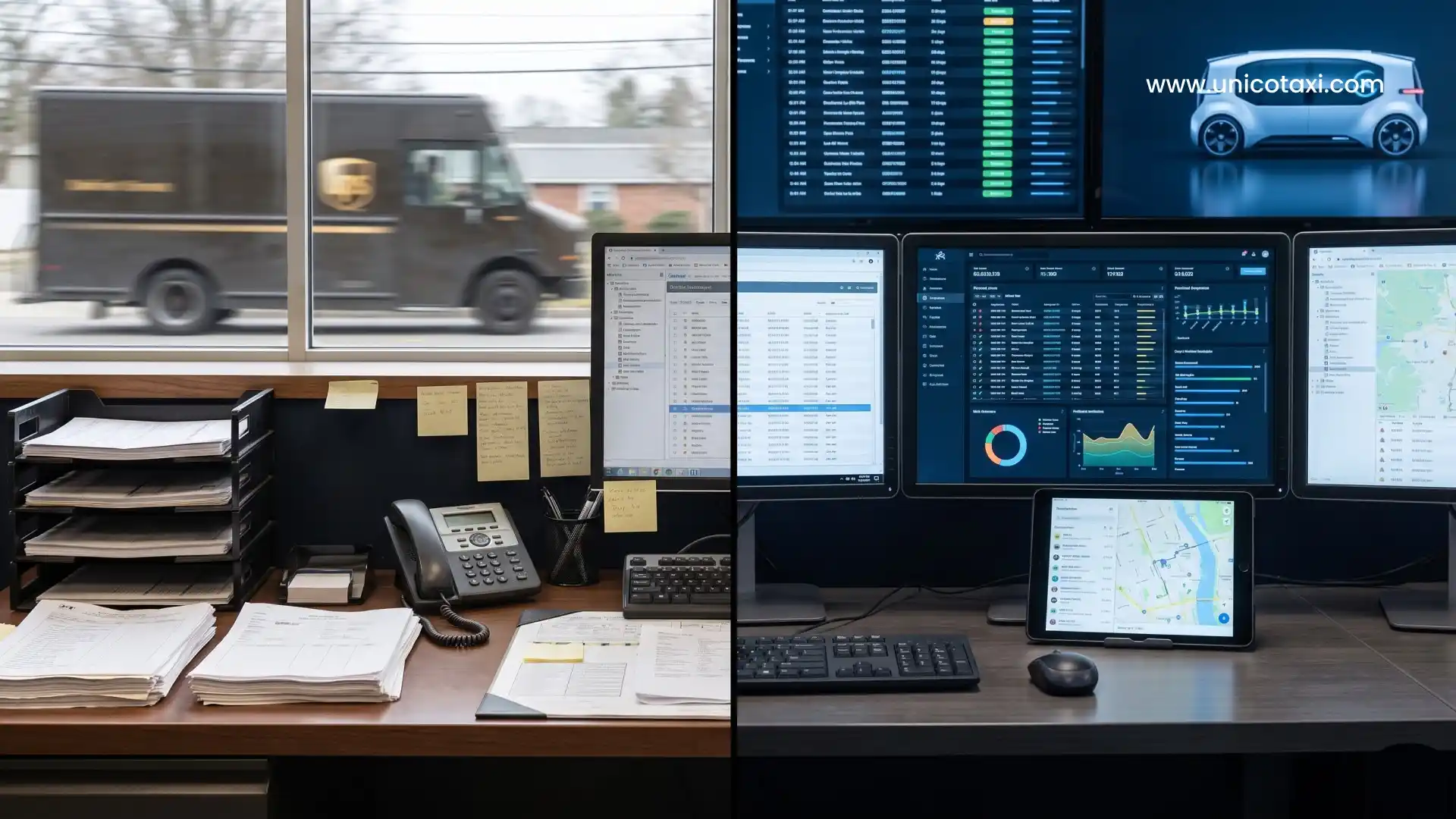
Riders today compare every transportation option to the smoothest, most convenient app on their phone, whether that's food delivery, banking, or a ride-hailing platform. Once a rider gets used to seeing a driver's live location, a fixed upfront fare, and a one tap payment option, going back to a phone call and a guessed arrival time feels like a step backward.
Problem: Riders who used to call the same company every time are now splitting their bookings across multiple apps, or have stopped calling altogether. This often shows up slowly, a few less bookings a week, before it becomes a real drop in revenue. By the time it's obvious in the monthly numbers, the habit shift has usually already been underway for months.
Problem: Skilled drivers increasingly prefer platforms that offer transparent earnings, flexible schedules, and less manual paperwork to deal with at the end of every shift. A fleet still relying on paper logs and end-of-day cash counting looks outdated to drivers who have options elsewhere.
Problem: Long hold times, unclear fare estimates, and no way to confirm a driver is actually coming are common complaints for operators still relying on phone-based booking. Every extra step between a rider deciding to book and actually confirming a ride is a chance to lose them to a faster option.
Solution: Digital taxi business models solve this by letting riders book, track, and pay in the same place, with a locked-in fare shown before the ride even starts. Fewer steps means fewer riders abandoning the booking halfway through.
Problem: When riders and dispatchers can't see where a vehicle actually is, small delays turn into bigger frustrations, and dispatchers end up making phone calls just to check status. That back and forth eats into time that should go toward actually running the fleet efficiently.
Problem: Riders increasingly expect to pay by card, digital wallet, or in app balance, not just cash. A business that only accepts cash risks losing riders who simply don't carry it anymore, especially younger riders and business travelers.
Fixing these five signs one at a time helps, but the bigger move is treating this as a single connected upgrade rather than five separate patches. A fleet still running five different workarounds for five different problems ends up just as tangled as before, only now with more tools to manage.
UnicoTaxi was built specifically to help transportation businesses make this shift without starting from scratch. The platform includes a passenger app, driver app, admin panel, and dispatcher panel, all working from the same live data, so nothing gets lost between booking, dispatch, and payment.
None of these five signs mean a transportation business is beyond saving, they just mean the shift toward digital tools needs to happen now rather than later. Riders already expect app-based booking, live tracking, and flexible payments as the baseline, not a bonus feature, and every month spent without them is a month competitors spend pulling riders away.
If riders are complaining about booking friction, drivers are leaving for app-based platforms, or you have no real-time tracking, those are clear signs it's time to modernize rather than wait.
Not necessarily true. Many platforms, including UnicoTaxi, are built to scale with fleet size, so smaller operators can access the same booking, tracking, and payment tools as larger competitors without overbuilding.
Most modern taxi dispatch software is designed with simple, intuitive interfaces, so drivers typically need only a short onboarding session rather than extensive retraining.
It depends on your current setup, but consolidating booking, dispatch, and payments into one platform is usually more reliable long term than adding separate tools on top of an outdated system.
Many operators notice improvements in booking volume and rider satisfaction within the first few weeks, though full, sustained results depend on how quickly both drivers and riders fully adopt the new system.
Shreya
Share Article


Shreya is a Content Writer at UnicoTaxi with a passion for creating content that is simple, informative, and easy to understand. She writes about taxi dispatch software, ride-hailing technology, and mobility solutions, helping businesses stay updated with the latest industry trends. With a strong interest in SEO and digital marketing, she enjoys turning complex ideas into content that provides real value to readers. Shreya believes that good content should not only rank well on search engines but also answer people’s questions in a clear and engaging way.


Get a Fast Response from our Sales Team