


21-07-2026
Autonomous vehicles are gradually moving from research labs to real-world transportation services, making dispatch readiness an important topic for taxi operators and mobility businesses. While fully autonomous taxi fleets are not yet common in most cities, the technology behind them is advancing rapidly. Preparing today means investing in intelligent dispatch software, cloud-based fleet management, AI-powered decision-making, and scalable digital infrastructure that can support both human-driven and autonomous vehicles in the future. Businesses that modernize their operations now will be better positioned to adopt emerging mobility technologies as they become commercially viable.
The transportation industry has always evolved alongside technological innovation.
From radio dispatch systems to GPS navigation and mobile ride-booking applications, each advancement has transformed how taxi businesses operate and serve customers.
Today, another significant shift is underway.
Autonomous vehicle technology is steadily progressing, supported by advances in artificial intelligence, sensors, connected vehicles, and cloud computing.
Although widespread deployment of self-driving taxis will take time and depends on regulations, infrastructure, and public acceptance, fleet operators do not need to wait until autonomous vehicles become mainstream to prepare.
The smartest businesses are already investing in dispatch platforms that can adapt to the future of mobility.
Many fleet owners believe autonomous vehicles remain a distant concept.
While fully driverless transportation is still evolving, the technologies supporting autonomous operations are already influencing today's dispatch systems.
Artificial intelligence, predictive analytics, route optimization, automated ride assignment, and cloud-based fleet management are all building blocks for future autonomous mobility.
Businesses using outdated dispatch methods may eventually face greater challenges when adopting these technologies.
By contrast, companies investing in AI cab dispatch software are creating a technology foundation that can support future innovations without requiring a complete operational overhaul.
Future readiness isn't about replacing drivers tomorrow.
It's about ensuring today's technology can evolve with tomorrow's transportation landscape.
Autonomous vehicle dispatch refers to the intelligent coordination of self-driving vehicles using software rather than traditional human dispatch operations.
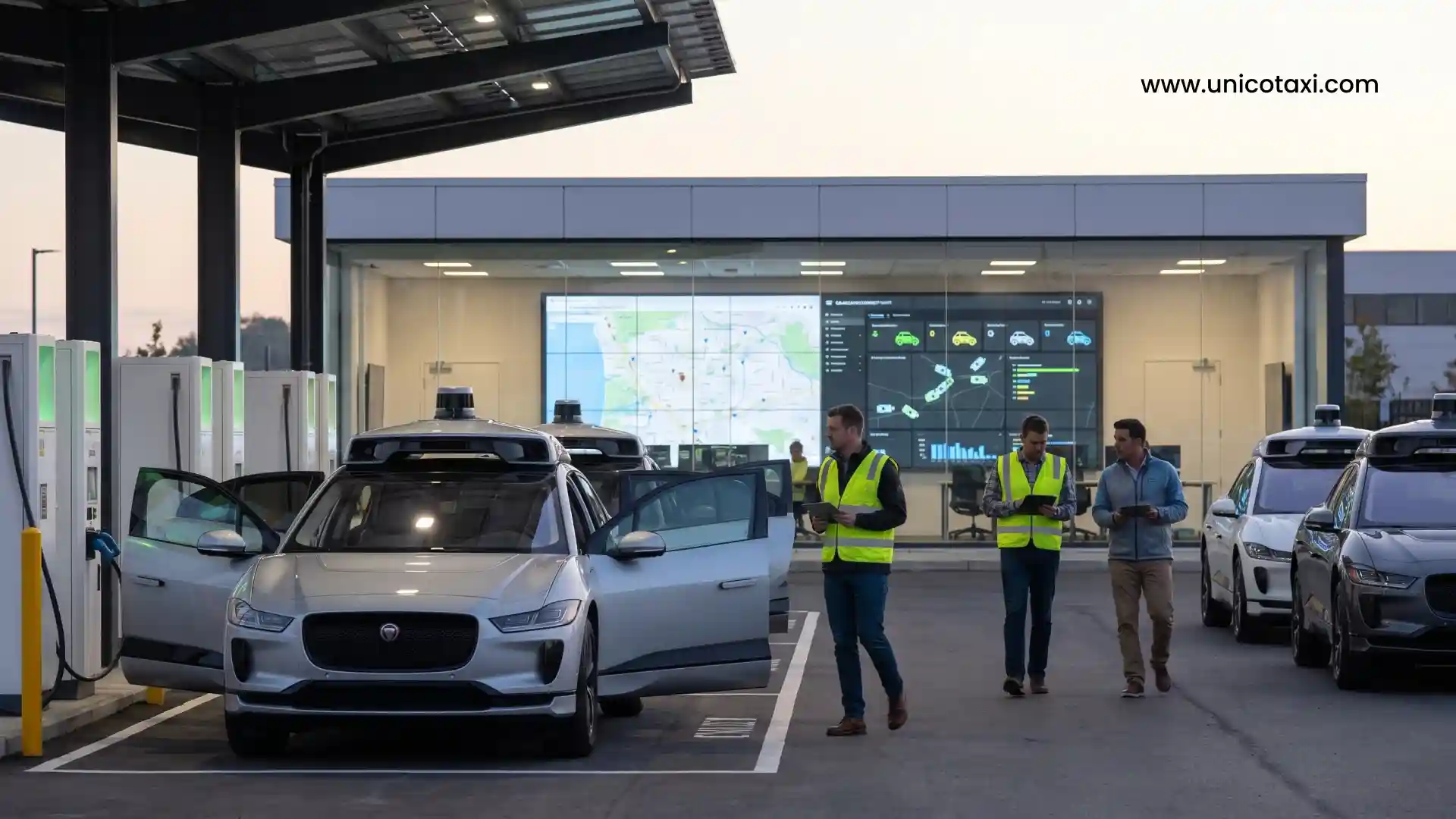
Instead of assigning trips to human drivers, the dispatch platform manages vehicle availability, route planning, charging schedules, maintenance requirements, passenger requests, and fleet optimization automatically.
The system continuously evaluates operational data to determine:
Which vehicle should accept a booking.
Which route minimizes travel time.
When vehicles require charging.
When maintenance should be scheduled.
How vehicles should be positioned across service areas.
How traffic conditions affect fleet efficiency.
Although today's taxi fleets primarily consist of human drivers, many of these decision-making capabilities are already available through AI-powered dispatch platforms.
Also Read: How Automated Driver Assignment Improves Taxi Dispatch System
Artificial intelligence enables dispatch systems to process thousands of operational decisions within seconds.
Unlike manual dispatch, AI evaluates multiple variables simultaneously, including live traffic conditions, vehicle locations, passenger demand, historical ride patterns, weather conditions, and fleet availability.
As autonomous vehicles become more common, these algorithms will become even more important because software—not people—will coordinate vehicle movement across entire cities.
Machine learning continuously improves dispatch accuracy by learning from operational data.
Every completed journey provides additional information that helps optimize future ride assignments, routing decisions, and fleet utilization.
For taxi businesses adopting AI today, future autonomous integration becomes significantly easier because much of the required operational intelligence already exists.
Autonomous mobility depends heavily on cloud technology.
Unlike traditional software installed on local servers, cloud-based dispatch system continuously synchronizes information between vehicles, passengers, operators, and business management systems.
This creates one centralized source of real-time operational data.
Fleet managers can monitor vehicle locations, booking activity, battery levels, service requests, and operational performance from virtually anywhere.
Cloud platforms also enable continuous software updates, allowing businesses to introduce new AI capabilities and security improvements without interrupting daily operations.
As autonomous transportation grows, cloud infrastructure will become increasingly important because connected vehicles must constantly exchange information with dispatch systems and operational networks.
Many autonomous vehicle projects are closely connected with electric mobility.
Electric vehicles offer lower operating costs, reduced emissions, and fewer mechanical components than traditional combustion engines.
Future dispatch platforms will therefore need to manage not only ride assignments but also battery levels and charging schedules.
Rather than sending every available vehicle to accept new bookings, intelligent dispatch systems will evaluate remaining battery capacity before assigning trips.
Vehicles approaching low charge levels can automatically be routed to charging stations while other vehicles continue serving customers.
This level of operational coordination improves both fleet efficiency and service reliability.
For businesses already adopting electric vehicles, selecting dispatch software capable of supporting EV operations is an important long-term investment.
One of the biggest misconceptions surrounding autonomous transportation is that businesses must purchase self-driving vehicles immediately.
In reality, preparation begins with software.
Fleet operators can start by modernizing their existing technology stack.
Implementing AI-powered dispatch, cloud-based fleet management, predictive demand forecasting, real-time GPS tracking, automated reporting, and digital driver management creates an operational framework capable of supporting future mobility innovations.
These investments deliver immediate business benefits while preparing companies for eventual autonomous integration.
Rather than waiting for technology to mature, operators can strengthen their competitive position today.
Autonomous vehicles may still be in the early stages of commercial adoption, but preparing for them today delivers immediate advantages. Modern dispatch platforms are designed to improve operational efficiency regardless of whether a fleet consists of human drivers, autonomous vehicles, or a combination of both.
One of the most noticeable benefits is improved fleet visibility. Operators can monitor every vehicle, trip, and service request from a centralized dashboard, making it easier to respond to changing demand and optimize daily operations.
Businesses also gain greater flexibility when expanding into new service areas. Because cloud-based dispatch platforms are built to scale, adding vehicles, drivers, or even entirely new cities becomes far simpler than relying on outdated software.
Preparing early also reduces future technology costs. Instead of replacing legacy systems when autonomous vehicles become commercially viable, businesses can build on an existing digital infrastructure that is already compatible with AI-driven fleet management.
Most importantly, companies that embrace modern dispatch technology are often viewed as innovative, reliable, and forward-thinking—qualities that help attract customers, business partners, and investors.
Preparing for autonomous mobility involves more than adopting new software.
Regulations continue evolving across different states and countries, and legal frameworks for autonomous transportation are still developing. Taxi businesses should stay informed about changes that could affect vehicle testing, insurance requirements, passenger safety, and licensing.
Cybersecurity is another critical consideration.
Connected vehicles continuously exchange operational data with cloud platforms, making strong security practices essential. Dispatch software should include encrypted communications, secure authentication, regular software updates, and continuous monitoring to protect business operations and customer information.
Infrastructure also plays an important role.
Reliable internet connectivity, accurate digital maps, charging facilities for electric vehicles, and advanced traffic management systems all contribute to successful autonomous operations.
Rather than viewing these as barriers, fleet operators should see them as opportunities to modernize their businesses step by step.
Bonus Read: How Fleet Management Software Helps Fleet Owners
The future of transportation extends beyond autonomous vehicles.
Cities are gradually becoming more connected through smart traffic systems, intelligent parking solutions, connected infrastructure, and real-time transportation networks.
Future dispatch platforms will communicate not only with vehicles but also with traffic signals, weather services, airports, public transportation systems, charging stations, and city infrastructure.
Imagine a dispatch platform that automatically detects a major sporting event, predicts increased passenger demand, identifies traffic congestion around the venue, and repositions available vehicles before the event concludes.
Similarly, flight delays could automatically trigger adjustments in airport vehicle availability without requiring manual intervention.
These capabilities represent the next stage of intelligent mobility, where AI continuously coordinates transportation services using live information from multiple connected systems.
Taxi businesses adopting cloud-based, AI-powered dispatch software today will be better prepared to integrate with these emerging smart city ecosystems.
No one can predict exactly when autonomous vehicles will become a common part of urban transportation.
What businesses can control, however, is the flexibility of the technology they invest in today.
Rather than purchasing software that only solves immediate operational problems, fleet operators should look for platforms that continue evolving alongside industry innovation.
Open APIs, modular architecture, cloud deployment, AI-powered automation, and regular software updates allow businesses to adopt new technologies without rebuilding their entire operation.
This approach reduces long-term costs while protecting technology investments as the mobility landscape changes.
The goal isn't to prepare for one specific future.
It's to build a dispatch ecosystem capable of adapting to whatever comes next.
Autonomous vehicles represent one of the most significant technological developments in modern transportation, but readiness begins long before driverless taxis become part of everyday life.
Today's taxi businesses can prepare by investing in intelligent dispatch software, artificial intelligence, cloud-based infrastructure, predictive analytics, and scalable fleet management systems.
These technologies improve operational efficiency immediately while creating the digital foundation needed for future autonomous mobility.
Businesses that modernize their operations now won't simply be prepared for autonomous transportation—they'll also benefit from better dispatch decisions, improved customer experiences, higher fleet utilization, and stronger long-term competitiveness.
Preparing for the future isn't about replacing people with technology.
It's about using technology to build smarter, safer, and more efficient transportation services for the years ahead.
At UnicoTaxi, we develop future-ready taxi dispatch software designed for today's mobility businesses and tomorrow's transportation innovations. Our cloud-based platform combines AI-powered dispatch, predictive demand forecasting, real-time GPS tracking, fleet management, driver and passenger applications, business analytics, and white-label customization into one intelligent ecosystem.
Whether you're operating a city taxi service, airport transfer business, corporate transportation company, or planning for the next generation of connected mobility, UnicoTaxi provides scalable technology that helps you improve efficiency today while preparing for the future of autonomous transportation.
Ready to future-proof your taxi business? Explore how UnicoTaxi's intelligent dispatch platform can help you embrace AI, optimize fleet operations, and stay ahead in the rapidly evolving mobility industry.
Try UnicoTaxi's System for Free
Autonomous vehicle dispatch readiness refers to preparing a taxi or mobility business with AI-powered dispatch software, cloud infrastructure, and scalable fleet management systems that can support future autonomous vehicle operations.
No. Businesses can prepare by implementing intelligent dispatch software, cloud-based operations, predictive analytics, and digital fleet management. These technologies provide immediate benefits while supporting future autonomous integration.
AI analyzes real-time operational data, optimizes ride assignments, predicts passenger demand, manages vehicle availability, and supports efficient fleet coordination—making it a core component of autonomous mobility.
No. Dispatch software becomes even more important because it serves as the central intelligence coordinating autonomous vehicles, customer bookings, routing, maintenance, and fleet performance.
By adopting cloud-based, AI-powered dispatch platforms that support scalability, software updates, API integrations, predictive analytics, and future mobility technologies.
Satheesh
Share Article


Satheesh is a creative writer at UnicoTaxi, specializing in engaging and informative content about taxi clone apps and mobility solutions. With a strong grasp of the ride-hailing app ecosystem, he excels at turning complex technical concepts into clear, accessible insights. His writing highlights how digital innovations are reshaping taxi and on-demand service businesses. By blending clarity, creativity, and industry knowledge, Satheesh helps transport tech entrepreneurs stay ahead of emerging trends and innovations in the on-demand economy.


Get a Fast Response from our Sales Team