


22-07-2026
Artificial intelligence (AI) has become one of the most talked-about technologies across industries, and the transportation sector is no exception. From self-driving vehicles and predictive analytics to automated customer support and smart routing, AI is often presented as a solution that can revolutionize every aspect of mobility. While these innovations are exciting, they have also created confusion. Many taxi fleet owners wonder whether AI-powered dispatch is genuinely transforming operations or if it is simply another technology trend surrounded by marketing hype.
The reality lies somewhere in between. AI is not a magical solution that instantly fixes every operational challenge, but it is far more than a buzzword. When implemented through modern taxi dispatch software, AI delivers measurable improvements in efficiency, decision-making, customer service, and profitability. It helps fleet operators process large volumes of ride requests, reduce idle time, optimize routes, forecast demand, and allocate drivers more intelligently than traditional dispatch methods.
For taxi companies operating in increasingly competitive markets, understanding the practical value of AI is essential. Instead of focusing on futuristic promises, businesses should evaluate how AI solves everyday operational problems and supports long-term growth.
In this article, we'll separate the myths from reality and explore the real-world benefits of AI-powered dispatch for taxi businesses.
Traditional dispatch systems rely on fixed rules or manual decision-making to assign rides. A dispatcher reviews available drivers, considers the pickup location, and manually allocates a booking. While this approach can work for small fleets, it becomes increasingly difficult as ride volumes grow.
AI-powered dispatch takes a different approach.
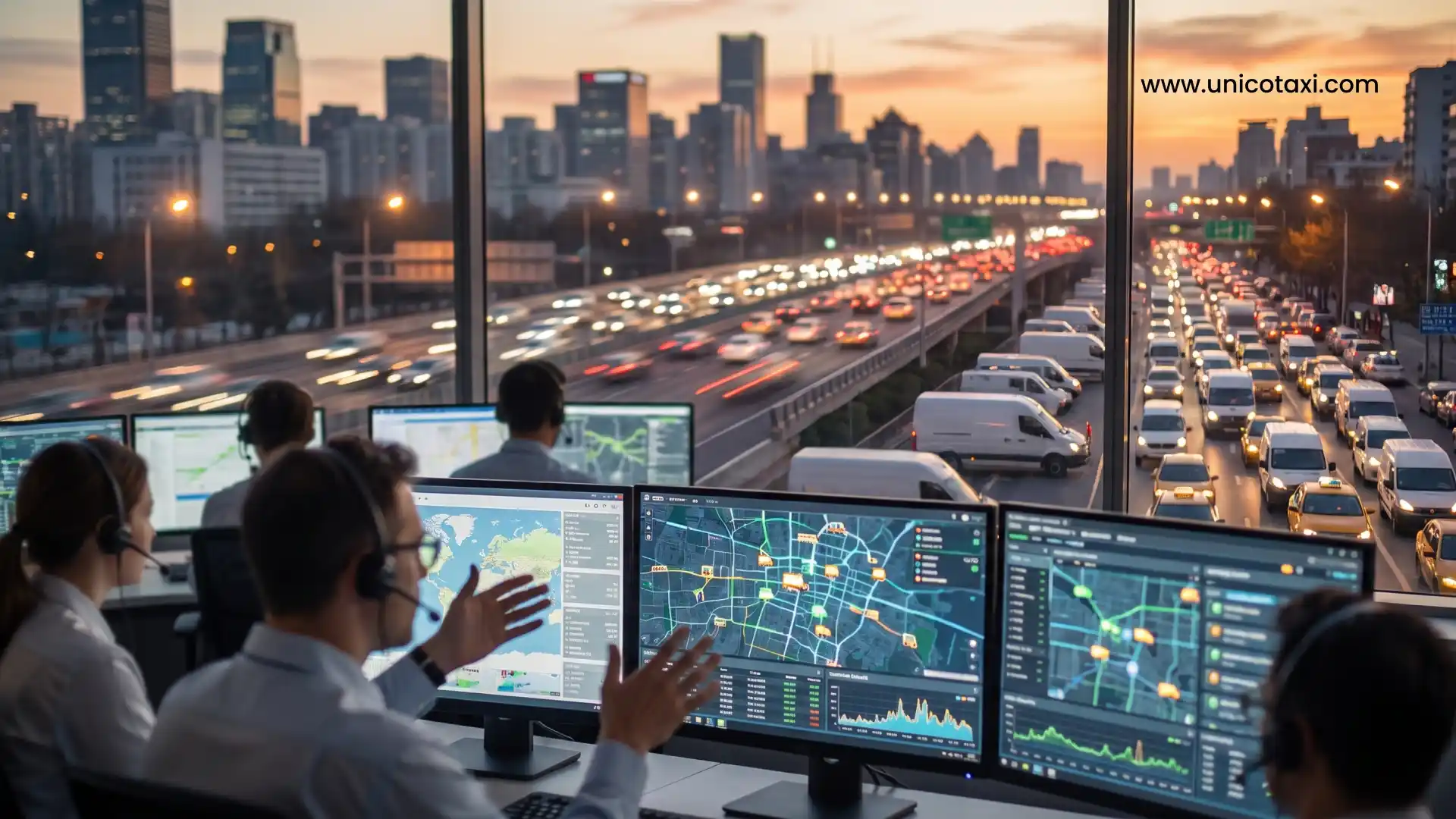
Instead of relying solely on static rules, AI continuously analyzes multiple data points before making a dispatch decision. These include driver location, traffic conditions, estimated pickup times, historical demand, vehicle availability, route efficiency, and even previous booking patterns.
By processing this information in seconds, AI identifies the most efficient ride assignment while adapting to changing operational conditions in real time.
The result is a dispatch system that learns, improves, and responds faster than traditional manual processes.
One of the biggest misconceptions about AI is that it will eliminate the need for dispatchers.
In reality, AI is designed to assist rather than replace human expertise.
Routine tasks such as assigning rides, calculating routes, and monitoring vehicle locations can be automated, allowing dispatch teams to focus on customer service, operational planning, handling exceptions, and resolving complex issues.
Instead of spending time on repetitive manual work, dispatchers become operational managers who oversee fleet performance and make strategic decisions supported by AI-generated insights.
Many small and medium-sized fleet operators assume an AI-powered dispatch system is too expensive or complex for their businesses.
Modern cloud-based dispatch platforms have changed that.
Today, AI capabilities are available to fleets of all sizes. Whether a company operates 10 taxis or 1,000 vehicles, cloud technology allows businesses to access intelligent dispatch features without investing in costly infrastructure.
Scalable software ensures that smaller operators can benefit from the same technologies used by larger transportation companies while paying only for the resources they need.
One of AI's greatest strengths is its ability to process information instantly.
When a booking is received, AI evaluates multiple variables before selecting the best driver for the trip.
These variables may include:
This automated decision-making significantly reduces response times while improving fleet efficiency.
Passengers receive quicker pickups, and drivers spend less time traveling without passengers.
Every idle vehicle represents lost revenue.
AI helps maximize fleet productivity by ensuring that available drivers are assigned rides as efficiently as possible. Instead of concentrating bookings among a few drivers while others remain inactive, AI distributes trips more evenly across the fleet.
Improved utilization leads to:
For taxi businesses, this means generating more revenue from existing resources rather than increasing operating costs.
One of the most valuable applications of AI is demand forecasting.
Rather than waiting for ride requests to appear, AI analyzes historical booking data, weather conditions, airport arrivals, holidays, local events, and traffic trends to predict where demand is likely to increase.
Fleet managers can then reposition drivers in advance, ensuring vehicles are available where passengers are expected to need them most.
This proactive approach reduces wait times, improves customer satisfaction, and increases the number of completed trips during busy periods.
Also Read: 5 Tips to Deal with Passenger Complaints in the Taxi Business
Traffic congestion affects every taxi business.
AI-powered dispatch systems continuously monitor live traffic conditions and recommend faster or more efficient routes. If an accident, road closure, or heavy congestion occurs, the system can suggest alternative routes in real time.
Benefits include:
For electric vehicle fleets, optimized routing also helps conserve battery range and improve charging efficiency.
AI generates insights that extend far beyond ride assignments.
Modern dispatch platforms collect operational data that helps fleet managers evaluate performance across multiple areas, including:
Instead of relying on assumptions or manual reports, operators can make informed decisions backed by accurate, real-time data.
This improves strategic planning and supports continuous operational improvement.
While AI delivers significant advantages, it is not without limitations.
Its effectiveness depends on the quality of the data it receives. Inaccurate GPS information, outdated maps, incomplete driver data, or poor system configuration can reduce the accuracy of AI recommendations.
Additionally, AI cannot replace human judgment in every situation. Exceptional events such as severe weather, emergency road closures, or customer-specific requests may still require manual intervention.
The most successful taxi operations combine AI automation with experienced fleet managers who can oversee and refine operational decisions.
Artificial intelligence will continue to evolve alongside emerging transportation technologies such as connected vehicles, electric fleets, smart city infrastructure, and autonomous driving systems.
Taxi businesses that adopt AI-powered dispatch today will be better positioned to integrate future innovations without rebuilding their operational infrastructure.
As AI continues to improve, dispatch platforms will become even more capable of predicting demand, optimizing routes, supporting sustainability goals, and enhancing customer experiences.
Investing in AI today is not simply about keeping up with technology—it is about creating a flexible foundation for long-term business growth.
AI delivers the greatest value when it is integrated into a reliable, scalable dispatch platform designed specifically for taxi operations.
UnicoTaxi's AI-powered Taxi Dispatch Software combines intelligent ride assignment, real-time GPS tracking, demand forecasting, automated dispatch, route optimization, driver management, and advanced analytics in one cloud-based solution. Whether you're operating a local taxi company, an airport fleet, or a multi-city transportation service, UnicoTaxi helps streamline operations, improve efficiency, and deliver exceptional passenger experiences.
Artificial intelligence has moved beyond industry buzzwords to become a practical tool for improving taxi fleet management. While AI cannot replace experienced dispatchers or eliminate every operational challenge, it provides measurable benefits that help businesses operate more efficiently and competitively.
From intelligent ride assignment and predictive demand forecasting to route optimization and real-time analytics, AI-powered dispatch enables taxi operators to reduce costs, improve fleet utilization, enhance customer satisfaction, and make smarter business decisions.
As the transportation industry continues to embrace digital transformation, businesses that invest in AI-powered dispatch solutions today will be better prepared to meet tomorrow's challenges and opportunities. Choosing a trusted platform like UnicoTaxi allows fleet operators to harness the real power of AI—not as hype, but as a practical advantage that drives sustainable growth.
AI-powered taxi dispatch software uses artificial intelligence, machine learning, GPS tracking, and real-time analytics to automate ride assignments, optimize routes, forecast demand, and improve fleet efficiency.
No. AI automates repetitive tasks such as ride allocation while allowing dispatchers to focus on customer support, operational planning, and managing exceptional situations.
Yes. Modern cloud-based dispatch platforms make AI accessible to taxi businesses of all sizes, helping improve efficiency without requiring major infrastructure investments.
AI reduces passenger wait times, improves ride assignment accuracy, optimizes routes, provides more reliable arrival estimates, and supports a smoother overall booking experience.
UnicoTaxi offers AI-powered dispatch, demand forecasting, real-time GPS tracking, automated ride assignment, advanced analytics, and scalable fleet management tools that help taxi operators increase efficiency, reduce costs, and prepare for the future of smart mobility.
Bala
Share Article


Bala serves as a Digital Content Specialist at UnicoTaxi, crafting comprehensive guides and resources tailored for taxi business owners and entrepreneurs. Drawing on extensive experience in mobility and transport tech, he transforms industry insights into practical, actionable strategies for launching, scaling, and thriving in taxi operations.


Get a Fast Response from our Sales Team