


08-08-2026
At its heart, The UnicoTaxi ride-sharing solution involves two connected features working together. Fare-splitting divides the cost of a shared trip fairly among riders automatically within the app. Pooling makes fare-splitting possible by matching riders going in a similar direction into the same vehicle.
When two or more riders share a pooled trip, the app calculates each rider's share based on the distance they travel personally, not an even split. A rider going three miles pays for three miles, not half of a ten mile total that someone else is riding.
Here’s a simple way to see the numbers. A solo ten mile ride might cost a rider $20. If that same route is pooled with a second rider heading in a similar direction, the trip might extend to twelve miles with an extra stop, splitting the cost to about $13 per rider. Each rider pays less than they would alone, and the operator collects $26 for one trip instead of $20, all while using the same vehicle and driver and hardly any extra time.
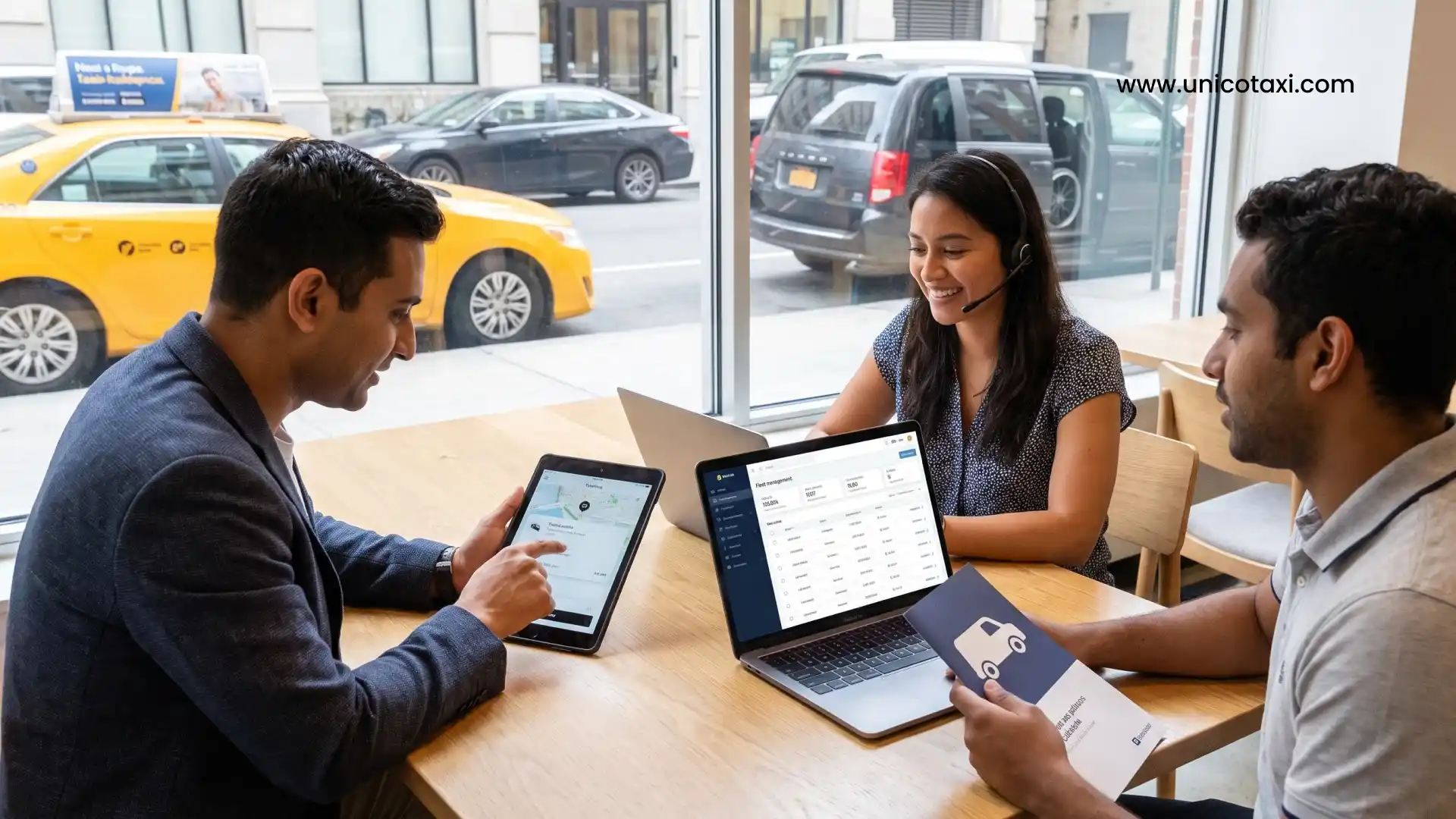
Imagine a dispatcher's screen in the middle of a shift. A pooling request comes in from a rider near downtown. Instead of assigning a dedicated vehicle right away, the system checks for another rider already heading in a compatible direction. If a match is found, the second rider gets added to the same trip, with a small detour calculated automatically and fare adjustments made for both riders in real-time.
The driver sees one continuous trip with two stops, not two separate jobs. The driver's workflow remains uncomplicated since the difficulty is managed within the dispatch logic.
Pooling and fare-splitting are not separate products added on. They integrate into the same taxi dispatch software that operators currently use, alongside driver management, live tracking, and fare calculation for every trip type.
Not quite, and it’s important to be clear about that. Pooling works best in denser areas, where riders going in similar directions are likely to be nearby at the same time. In more spread-out, low density markets, matches occur less often, and the feature sees reduced use.
Getting started mostly involves configuration, not a complete overhaul. Pooling can be limited to specific zones or times when rider density is adequate. Fare-splitting rules, which determine how costs divide among riders, can be adjusted to fit local pricing expectations. Plus, since it operates as a white-label feature, it shows under the operator's branding instead of as a separate product with someone else's name on it.
No. Each rider pays based on the distance they travel personally, not a flat split, so someone going a shorter distance pays less than someone going farther in the same pooled trip.
No, usually the opposite. A pooled trip typically generates more total revenue than a solo trip covering the same base route, as it collects fares from multiple riders using one vehicle and one driver.
Yes. Pooling can be set up by zone and time, so an operator can activate it where and when rider density supports good matches, rather than applying it everywhere by default.
No. Solo rides continue exactly as they do today. Pooling is an additional option, not a replacement for standard private trips.
No. It operates within the same platform that operators already use for dispatch, tracking, and fleet management. No second app or separate login is needed to offer it.
Satheesh
Share Article


Satheesh is a creative writer at UnicoTaxi, specializing in engaging and informative content about taxi clone apps and mobility solutions. With a strong grasp of the ride-hailing app ecosystem, he excels at turning complex technical concepts into clear, accessible insights. His writing highlights how digital innovations are reshaping taxi and on-demand service businesses. By blending clarity, creativity, and industry knowledge, Satheesh helps transport tech entrepreneurs stay ahead of emerging trends and innovations in the on-demand economy.


Get a Fast Response from our Sales Team