


29-07-2026
Exact arrival times are now one of the main factors affecting customer satisfaction in the ride hailing industry, since passengers no longer accept an approximate time and instead want to know precisely when their driver will arrive.
To keep up with these demands, many taxi operators are adopting an Uber Clone App that offers smarter dispatch and more accurate ETA.
It has become all the more difficult for taxi operators to meet these expectations while having to take into account traffic conditions, road closures, and varying demand.
Traditional GPS tracking has been used in the industry for many years, but it was not made with today's rapidly changing road conditions in mind. While it can indicate the location of a vehicle, it usually fails to predict delays before they occur. This causes the estimated arrival times to become inaccurate, leads to pickups being delayed, and causes customers to lose faith in the service.
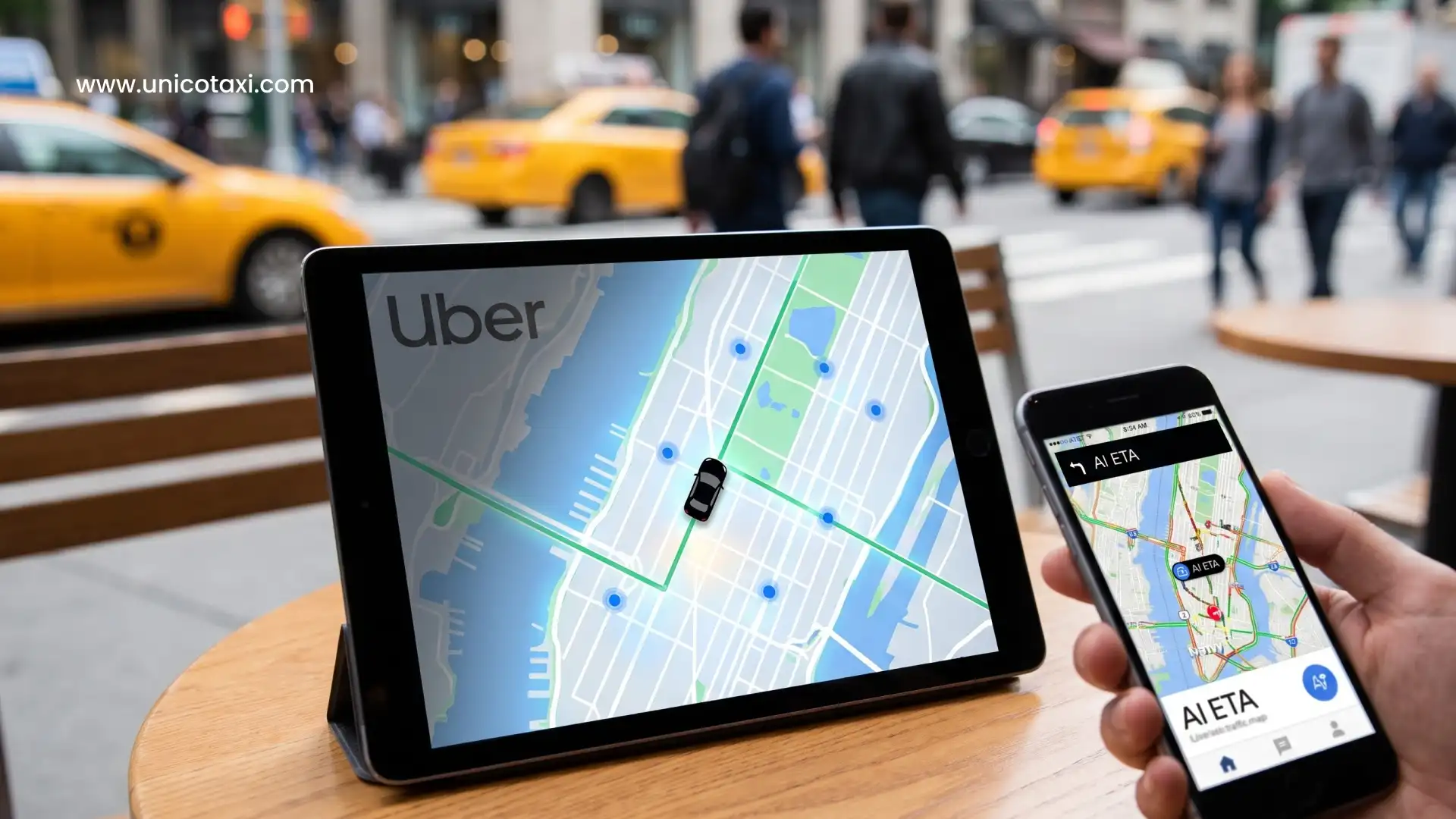
An Uber Clone App using AI makes a big impact in this situation. Modern ride-hailing systems achieve smarter, real time decisions for taxi companies by combining AI-driven ETA predictions with dynamic routing. Rather than depending on fixed routes and static calculations, the AI constantly examines current traffic conditions, historical travel patterns, weather conditions, and road events in order to provide more accurate ETAs and optimize each journey.
For those who own fleets, this means that operations will be more smoothly run, costs will be reduced, and customers will be happier.
Traditional GPS systems work out an estimated time of arrival by taking into account the distance, the present position, and the average speed of the vehicle. Although this approach functions all right in normal situations, it becomes unreliable quickly when traffic patterns change suddenly.
Picture a driver moving towards a passenger during the evening rush hour. If a sudden accident obstructs the quickest route or if heavy rain causes traffic to build up on a number of roads, the traditional GPS will still show the original estimated time of arrival until the delay is obvious, which then leaves both the driver and the passenger feeling frustrated.
For taxi companies, such delays result in greater operational difficulties since drivers end up spending more time stuck in traffic, passengers have to wait longer than they should, and the dispatch teams find it hard to stick to the schedule. Eventually, frequent delays can cause a drop in customer satisfaction, lead to negative reviews, and result in a loss of business.
The ride-hailing services of today require systems that go beyond simply showing a vehicle's position; they need technology that is able to predict changing conditions and react immediately.
Instead of using static calculations, ETA prediction is now powered by AI and provides intelligent forecasts.
Rather than providing an estimate of arrival time at the start of a journey, the AI constantly assesses a number of real-time factors during the trip; each time road conditions change, it recalculates the estimated time of arrival so that passengers are given the most accurate estimate possible.
The accurate prediction of the time of arrival is even more effective when dynamic routing is used.
This is different from traditional navigation systems, which choose a route once and seldom change it, in that dynamic routing constantly keeps an eye on traffic conditions during the journey and, before the driver comes to the point of delay, automatically detects a quicker alternative if congestion arises ahead.
This preventative method causes drivers to avoid unnecessary traffic rather than having to respond after they have already become stuck.
The advantages for taxi companies become greater as time goes on since drivers have less time to wait in traffic, are able to complete more journeys in each shift and use less fuel; at the same time, passengers have shorter waiting times and more reliable arrival times, which results in a more seamless experience as a whole.
In the whole fleet, these improvements result in greater efficiency, better use of resources, and higher levels of customer satisfaction. Instead of just monitoring vehicles, AI-powered ride-hailing software helps fleets to operate more intelligently each day.
An Uber Clone App is a ready-made, customizable ride-hailing platform. It includes the main features of Uber App, such as live GPS tracking, matching drivers with riders, in-app payments, fare calculation, and admin controls. This platform allows a business to launch under its own brand. Instead of taking over a year to build a taxi app from scratch, operators can use a tested platform and customize it to fit their service area, fleet size, pricing, and branding. This lets them launch in weeks instead of months. For taxi owners, an Uber Clone App is not just about copying Uber; it’s about accessing reliable technology without the time, cost, and risk of building it on their own.
For taxi operators, choosing to use taxi software like Uber with AI-powered ETA prediction involves more than simply adopting advanced technology since it also aims at improving efficiency, lowering costs, and giving customers a better experience.
A major benefit is that the operating costs are lower. By using intelligent routing, drivers are able to avoid traffic jams, which in turn reduces the amount of unnecessary mileage, fuel used, and idle time. Over the course of hundreds of journeys, these minor savings can have a noticeable effect on overall profitability.
AI also increases driver productivity since it suggests the fastest routes and updates them in real time, which means the drivers spend less time having to navigate delays and more time finishing rides. As a result, fleets are able to serve more customers without needing to add more vehicles to the road.
The biggest advantage is customer satisfaction since accurate pickup times help to build trust and fewer delays lead to a more seamless booking process. If riders know that they can count on your service, then they are more likely to become regular customers and to recommend your platform to other people.
Fleet managers can obtain valuable operational insights through the use of Taxi Dispatch Software powered by AI. They can keep an eye on traffic trends, spot the periods of highest demand, assess driver performance, and make better dispatch decisions by using real time data. The insights gained help with improved planning and contribute to better overall fleet performance.
Since not all ride-hailing platforms provide the same degree of performance, it is important to choose the right one.
Search for an Uber Clone script that features AI-driven ETA predictions together with dynamic routing, real-time GPS tracking, secure payment setup, and scalable fleet management tools; the platform should also allow for customization so that you can adapt the branding, pricing models, service areas, and ride categories to meet your business needs.
It is just as important to have scalability. If you are currently running a small fleet or if you intend to enter several cities, your software should be able to grow along with your business without needing a complete rebuild.
In the end, you should select a platform that is regularly updated and that has continuous technical support, since ride-hailing technology is changing rapidly and constant improvements aid your business in staying competitive.
Bonus Read: How to Build Your Own Ride-Hailing App to Take on Uber?
AI is now a key component of modern ride-hailing platforms.
In the coming years, AI will extend its capabilities beyond route planning to include predicting customer demand, detecting traffic delays before they happen, and placing drivers in locations where ride requests are most likely to occur. The more trips the systems process and the larger the datasets, the more accurate ETA predictions and dispatch decisions will become.
Any taxi business that introduces AI-powered technology at this stage will be in a better position to meet changing customer expectations and will be able to remain competitive in a transportation market that is becoming more digital.
We at UnicoTaxi assist taxi operators, ride-hailing startups, airport transfer companies, and other mobility businesses in simplifying their day-to-day operations through intelligent AI-driven taxi dispatch software.
Our platform combines AI-powered dispatch, demand forecasting, real-time GPS tracking, cloud-based fleet management, mobile apps for both drivers and passengers, secure payment setup, business analytics, and white label branding into a single, scalable solution. If you are operating a local taxi fleet or planning to expand into several cities, UnicoTaxi provides you with the tools needed to improve business efficiency, offer a better customer experience, and grow your business with confidence.
While traditional GPS tracking can indicate the location of a vehicle, it doesn't always offer the kind of insights required to ensure that fleets run smoothly as road conditions keep on changing.
An Uber-like app that uses AI to predict arrival times and provide dynamic routing enables taxi companies to go beyond simple tracking by offering accurate arrival estimates, more intelligent routing, and better operational control. This leads to higher driver productivity, lower operating costs, and a more pleasant experience for passengers.
Since competition is increasing, deciding to invest in an AI-powered Uber Clone App is not only an advantage but a sensible business move. Those taxi businesses that adopt this technology at present will find themselves in a better position to improve customer satisfaction, boost business efficiency, and remain ahead in a rapidly becoming more competitive ride-hailing market.
An Uber style app is a ready to launch ride hailing solution that includes key features such as passenger and driver apps, real time GPS tracking, the ability to book a ride, secure payments, and an admin dashboard. It can also be customized using advanced features such as AI-powered ETA prediction and dynamic routing in order to meet your business requirements.
Unlike conventional GPS systems, which mainly calculate arrival times by using distance, those powered by AI analyse live traffic, historical travel patterns, weather conditions, and road events in real time. This results in more accurate estimated times of arrival, fewer delays, and an improved overall customer experience.
Dynamic routing constantly modifies the driver's route in response to changing traffic conditions, which in turn helps to cut down on travel time, reduce fuel consumption, minimise delays, and increase the number of trips that drivers can make in a day, thus improving operational efficiency and raising customer satisfaction.
Yes, the majority of Uber clone applications are fully customizable, which enables businesses to tailor their branding, pricing schemes, service areas, payment options, types of rides, and other features. This flexibility means that they can be used by startups, local taxi companies, and large fleet operators as well.
Standard GPS tracking can only indicate where a vehicle is at the moment and usually finds it difficult to adjust quickly to changing road conditions. By combining predictive estimates of arrival time with dynamic routing, AI-driven ride hailing services help taxi companies to improve the efficiency of their dispatch, cut down on operating costs, and provide passengers with a more reliable experience.
Bala
Share Article


Bala serves as a Digital Content Specialist at UnicoTaxi, crafting comprehensive guides and resources tailored for taxi business owners and entrepreneurs. Drawing on extensive experience in mobility and transport tech, he transforms industry insights into practical, actionable strategies for launching, scaling, and thriving in taxi operations.


Get a Fast Response from our Sales Team