


17-07-2026
Every modern taxi dispatch software should include intelligent ride dispatch, real-time GPS tracking, passenger and driver mobile apps, cloud-based management, secure payment integration, fleet and driver management, AI-powered route optimization, business analytics, corporate booking support, and white-label branding to help transportation businesses operate efficiently and scale successfully.
If you're investing in taxi dispatch software, choosing a platform with the right features is far more important than choosing the lowest price. A modern dispatch system should do much more than assign rides to drivers. It should automate operations, improve fleet utilization, simplify communication, enhance passenger experience, and provide valuable business insights that help your taxi company grow. From AI-powered dispatch and real-time GPS tracking to cloud accessibility and business analytics, the right features can significantly improve both operational efficiency and customer satisfaction.
The transportation industry has changed dramatically over the last decade.
Passengers now compare taxi services with global ride-hailing platforms that offer instant booking, live driver tracking, digital payments, and accurate arrival estimates. At the same time, fleet operators are expected to manage larger driver networks while reducing operational costs and maintaining excellent customer service.
Because of these changing expectations, dispatch software has become the operational backbone of modern taxi businesses.
The challenge, however, is that many software providers advertise long feature lists without explaining which capabilities actually improve business performance.
Knowing what to look for before purchasing a dispatch platform helps entrepreneurs make smarter technology investments while avoiding expensive software replacements in the future.
For many entrepreneurs launching a taxi business, budget naturally becomes one of the first considerations.
While controlling costs is important, choosing software based only on pricing often creates long-term operational challenges.
Imagine purchasing dispatch software that handles bookings efficiently but lacks real-time GPS tracking. Initially, the lower price may appear attractive. As your business grows, however, dispatchers begin spending more time contacting drivers, customers repeatedly call to check arrival times, and operational delays become increasingly common.
Eventually, upgrading to another platform becomes unavoidable.
The same situation occurs when businesses choose software without proper reporting, driver management, automated dispatch, or scalable infrastructure.
Rather than viewing dispatch software as an expense, transportation businesses should consider it a long-term operational investment.
Choosing the right platform from the beginning reduces future disruptions while providing the flexibility needed to support business growth.
Every successful taxi operation depends on how efficiently bookings are assigned.
Manual dispatch may work for a small fleet, but as ride requests increase, assigning drivers individually becomes slower and more prone to mistakes.
Modern dispatch software should automate this process.
Instead of waiting for dispatchers to evaluate every booking manually, the system should instantly identify the most suitable driver based on location, availability, vehicle category, traffic conditions, and predefined business rules.
This intelligent approach benefits everyone involved.
Passengers receive faster confirmations.
Drivers spend less time waiting for bookings.
Dispatch teams can focus on managing exceptions instead of handling routine assignments.
As booking volumes increase, automated dispatch becomes one of the biggest contributors to operational efficiency.
Businesses looking toward future growth should also evaluate whether the platform supports AI-powered dispatch, which further improves driver allocation through predictive analysis and demand forecasting.
Location visibility has become one of the most valuable capabilities in transportation technology.
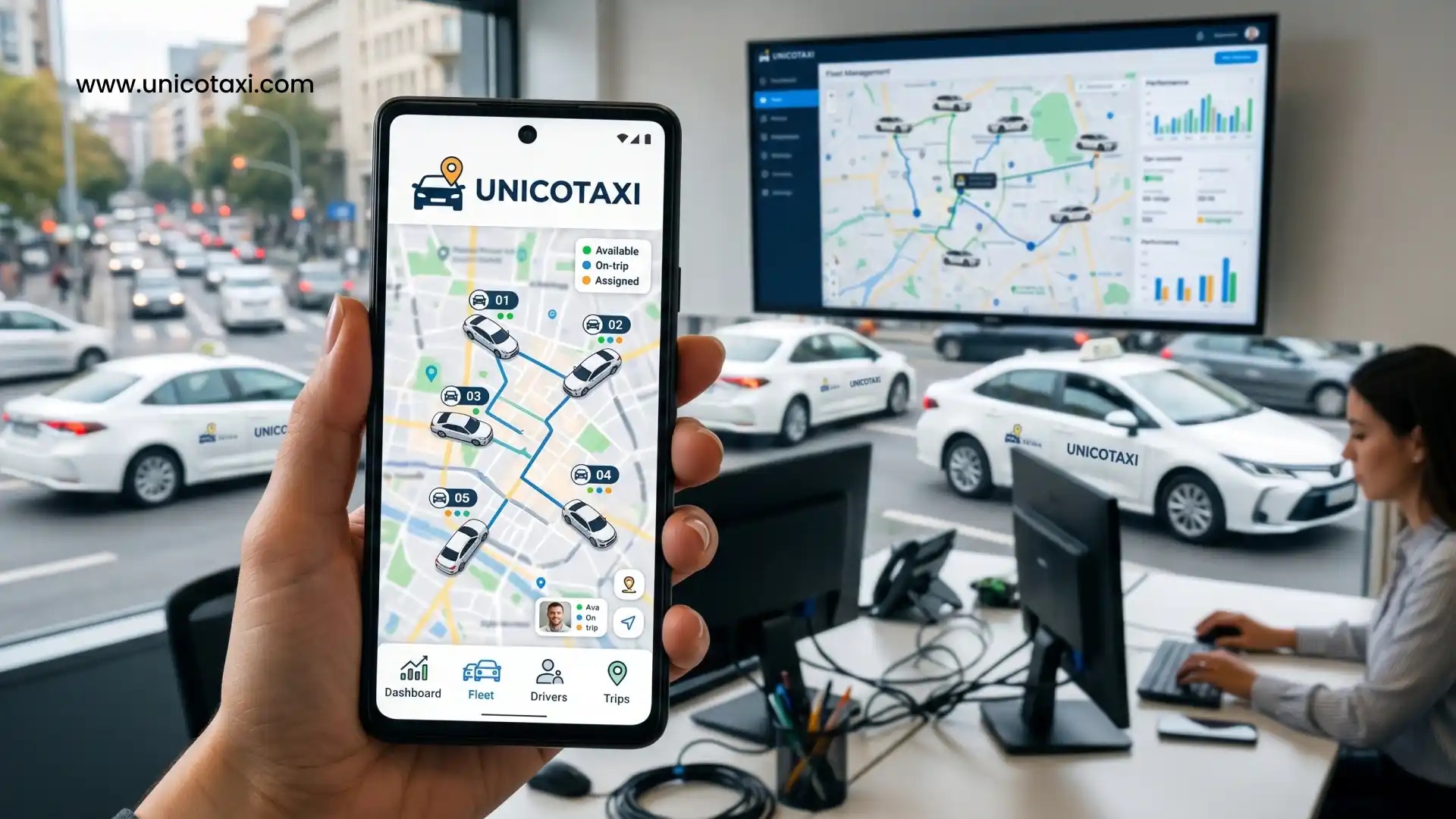
Instead of contacting drivers for location updates, dispatch teams can monitor every active vehicle through a centralized dashboard.
Passengers receive accurate arrival estimates while following their driver's journey directly within the mobile application.
For operators, GPS tracking provides much more than customer convenience.
It helps optimize routes, reduce unnecessary mileage, improve driver accountability, and respond more quickly when unexpected delays occur.
When evaluating dispatch software, businesses should ensure GPS functionality supports both live monitoring and historical trip records for reporting purposes.
Also Read: Why are Automated Driver Billings and Payouts Important?
A dispatch platform is only as effective as the experience it delivers to the people using it.
Passengers expect a simple booking process.
Drivers expect clear trip information.
Both applications should communicate seamlessly with the dispatch system.
A passenger app should allow users to:
Book rides within seconds.
Track their assigned driver.
Receive trip notifications.
Make secure digital payments.
View booking history.
Rate completed journeys.
The driver application should provide:
Instant trip requests.
Navigation support.
Ride status updates.
Earnings information.
Trip history.
Availability controls.
When these applications remain synchronized through the dispatch platform, communication becomes faster while reducing manual coordination between customers, drivers, and dispatchers.
Many transportation businesses now operate beyond a single office.
Owners travel frequently.
Operations managers oversee multiple locations.
Dispatch supervisors sometimes work remotely.
Cloud-based dispatch software supports these modern business environments by allowing secure access from virtually anywhere.
Instead of depending on office computers or local servers, authorized users can monitor bookings, review reports, assign drivers, and manage daily operations through internet-connected devices.
Cloud infrastructure also simplifies software updates, improves data security, and makes business expansion considerably easier.
For entrepreneurs planning long-term growth, cloud deployment has become one of the most valuable features to consider when selecting dispatch software.
Many taxi companies focus exclusively on managing today's bookings.
Successful transportation businesses also use operational data to improve tomorrow's performance.
Modern dispatch platforms should provide reporting tools that help owners understand:
Fleet utilization.
Peak booking hours.
Driver productivity.
Revenue trends.
Customer demand.
Frequently travelled routes.
These insights allow operators to make informed business decisions rather than relying on assumptions.
For example, identifying recurring demand around airports or business districts may influence future driver positioning.
Similarly, understanding peak travel periods can help businesses schedule drivers more efficiently while improving customer response times.
Dispatch software that combines operational management with meaningful business intelligence provides considerably more long-term value than software designed solely for booking coordination.
Passengers increasingly expect the same convenience from taxi services that they receive from other digital platforms. Whether they're booking a ride to the airport or scheduling transportation for a business meeting, they want the flexibility to pay using their preferred payment method without unnecessary delays.
A modern taxi dispatch platform should support secure digital payments through credit and debit cards, digital wallets, online banking, and other locally relevant payment options. Just as importantly, the payment process should be seamless, allowing passengers to complete transactions without leaving the application.
For taxi operators, integrated payment systems reduce manual cash handling, simplify accounting, minimize billing errors, and improve cash flow. Businesses also benefit from automated receipts, transaction records, and payment reconciliation, making financial management much easier as booking volumes increase.
When evaluating dispatch software, look beyond the number of supported payment gateways. Consider how securely payments are processed, whether recurring billing is available for corporate accounts, and how easily the system can accommodate future payment methods as customer preferences evolve.
Dispatching rides efficiently is only one part of running a successful taxi business.
Operators also need complete visibility into driver performance, vehicle availability, maintenance schedules, and daily fleet activity.
Without centralized fleet management, these responsibilities often become fragmented across multiple spreadsheets, phone calls, and manual records.
An effective dispatch platform brings everything together.
Fleet managers should be able to monitor driver availability, review completed trips, track vehicle utilization, evaluate driver performance, and manage fleet activity from a single dashboard.
For businesses operating larger fleets, this visibility helps identify opportunities to improve productivity while maintaining consistent service quality.
Driver management features should also simplify onboarding, document verification, earnings management, incentive programs, and communication between dispatchers and drivers.
As transportation businesses grow, having this information readily available becomes increasingly valuable for maintaining smooth operations.
Traffic conditions rarely remain the same throughout the day.
Road closures, accidents, construction work, and peak-hour congestion constantly affect travel times.
Traditional dispatch systems often rely on static routes, which can result in unnecessary delays and reduced fleet efficiency.
Modern dispatch platforms increasingly use artificial intelligence to optimize routes dynamically.
Rather than simply recommending the shortest distance, AI evaluates live traffic conditions, historical travel data, estimated arrival times, and road availability before suggesting the most efficient route.
This approach benefits both passengers and operators.
Passengers arrive at their destinations more quickly, while drivers spend less time in traffic and complete more trips during their shifts.
Over time, these small improvements contribute to better fleet utilization, lower fuel consumption, and improved customer satisfaction.
For businesses operating in busy metropolitan areas, intelligent route optimization has become a practical necessity rather than a premium feature.
Technology plays a significant role in shaping how customers perceive your business.
Passengers interact with your mobile application, notifications, invoices, and booking experience long before they speak with a driver.
Using a white-label dispatch platform allows transportation companies to present a fully branded experience without investing years in software development.
Instead of promoting a third-party provider, businesses can launch applications under their own company name, logo, colors, and brand identity.
This strengthens customer recognition while creating a more professional image.
White-label solutions also provide flexibility for businesses expanding into new cities or introducing additional transportation services under the same brand.
As competition increases, maintaining a strong and recognizable brand becomes just as important as providing reliable transportation.
How Should You Compare Different Taxi Dispatch Software Providers?
Choosing dispatch software shouldn't be based solely on feature comparisons.
Two platforms may offer similar capabilities on paper while delivering very different experiences in real-world operations.
When evaluating software providers, ask practical questions about how the platform performs after deployment.
Equally important, evaluate the provider's transportation expertise.
Companies that specialize in mobility technology often understand operational challenges far better than general software development agencies.
Their recommendations tend to be based on practical industry experience rather than generic software practices.
Choosing the right technology partner today can eliminate many operational challenges tomorrow.
Taxi dispatch software has evolved far beyond basic ride assignment.
Today, it serves as the operational foundation of successful transportation businesses, connecting passengers, drivers, dispatchers, fleet managers, and business owners through one intelligent platform.
The right software should simplify operations while helping businesses deliver exceptional customer experiences.
Features such as AI-powered dispatch, real-time GPS tracking, cloud accessibility, secure payments, driver management, business analytics, intelligent routing, and white-label branding are no longer optional additions.
They are becoming essential capabilities for companies that want to remain competitive in the rapidly evolving mobility industry.
Before selecting a dispatch solution, focus on how well the platform supports your long-term business goals rather than simply comparing prices or feature counts.
A scalable, future-ready system will continue creating value long after your business has grown beyond its initial launch.
Upgrade Your Taxi Business with UnicoTaxi's Smart Dispatch Software
The best taxi dispatch software doesn't just help you manage rides—it helps you build a more efficient, scalable, and customer-focused transportation business.
UnicoTaxi's AI-powered Taxi Dispatch Software combines intelligent ride allocation, real-time GPS tracking, cloud-based management, driver and fleet monitoring, secure payment integration, corporate booking support, business analytics, and white-label branding into one powerful platform.
Whether you're launching a new ride-hailing startup, managing an established taxi fleet, or expanding into airport transfers or corporate transportation, UnicoTaxi provides the technology you need to streamline operations and grow with confidence.
Automated or AI-powered dispatch is one of the most important features because it assigns rides efficiently, reduces passenger waiting times, and improves fleet utilization.
Cloud-based platforms provide remote accessibility, automatic updates, improved scalability, stronger data security, and easier business management compared to traditional on-premise systems.
Yes. Real-time GPS tracking helps dispatchers monitor vehicles, improves route planning, provides accurate arrival estimates, and enhances the passenger experience.
Modern dispatch systems should support corporate accounts, scheduled rides, centralized billing, recurring bookings, and travel reporting for business clients.
AI improves dispatch accuracy, predicts demand, optimizes routes, and helps transportation businesses increase efficiency while reducing operational costs.
Kiruthika
Share Article


Kiruthika is a Senior Content Writer at UnicoTaxi. She has been in the content writing industry for over 5 years and works closely with taxi, mobility, and on-demand delivery businesses. She understands the pulse of the transport tech industry, researches evolving market trends, and creates content that educates, informs, and drives growth. Kiruthika is passionate about storytelling, loves simplifying complex topics, and enjoys connecting with readers through impactful writing.


Get a Fast Response from our Sales Team