


03-08-2026
The data says it all. The automobile towing industry in the United States is valued at about $11.8 billion in 2026, spread across nearly 40,000 businesses nationwide. Additionally, the overall roadside assistance market is growing at about 5% a year, as more drivers expect quick, app based help instead of waiting longer.
For a taxi owner, this demand fits perfectly with existing operations. Drivers who sit idle between rides can take on towing or roadside jobs instead. Your dispatch skills, driver management, and customer service for taxis apply just as well to towing; the main difference lies in the type of jobs coming through the app.
Before you start building anything, it helps to know what services fall under this business.
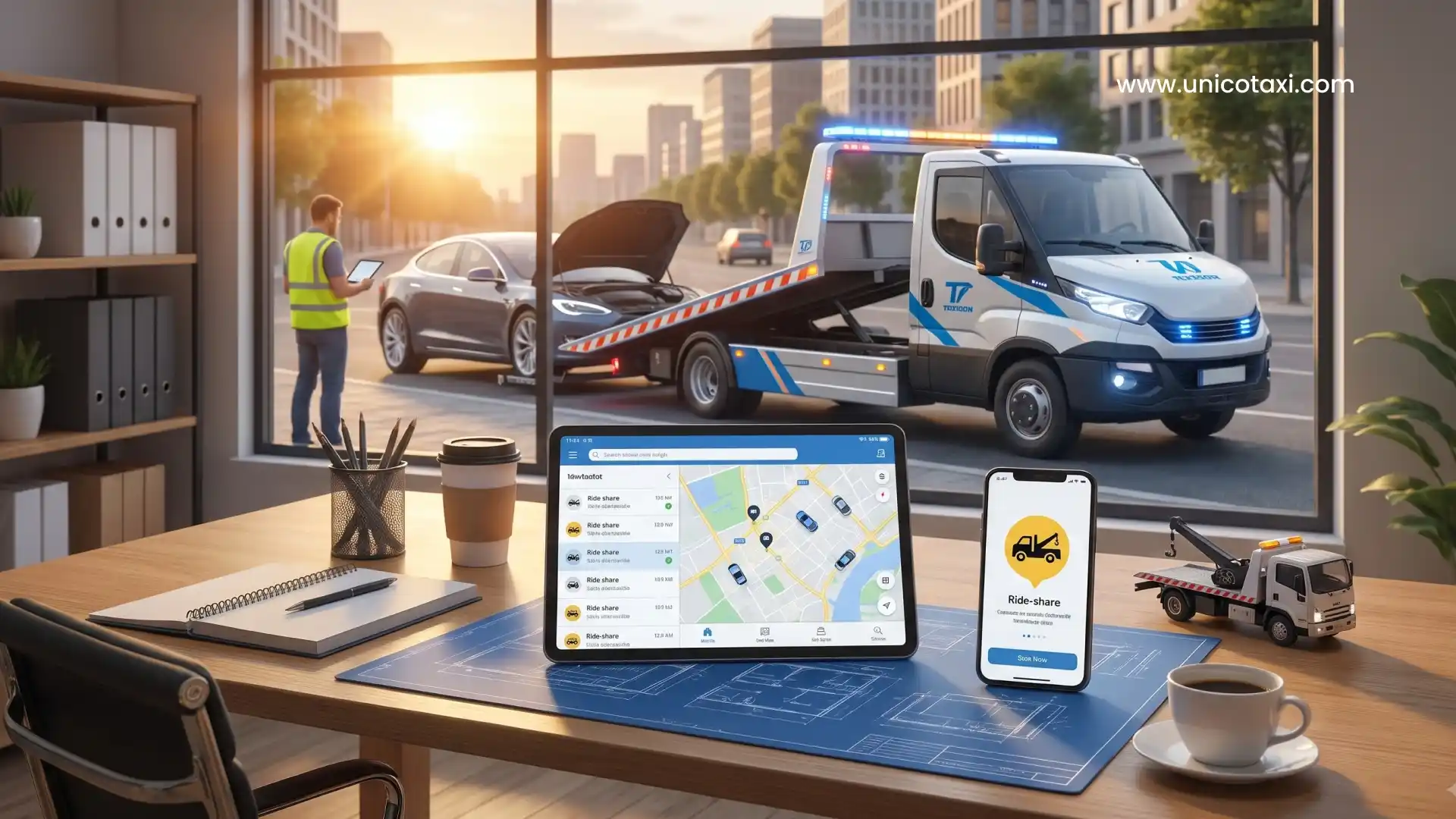
An Uber-like Tow Truck App needs three main parts: a customer app for requesting help, a driver app for accepting and completing jobs, and an admin dashboard to manage everything.
Some features are more important than others. Live GPS tracking allows customers to see their truck approaching in real time, just like tracking a ride. Automatic driver matching sends jobs to the nearest available truck, rather than relying on a dispatcher to make calls. Initial pricing, even as an estimate, builds trust with customers already having a stressful day. In-app payment means no one has to fumble for cash on the side of the road.
Manual phone dispatch works, but it doesn’t grow easily once you’re running more than a few trucks.
Tow Truck Dispatch Software automatically assigns jobs based on driver location and availability. This reduces response times and cuts down on the back and forth of phone calls. Customers receive live updates on their phone instead of having to call back to ask about the truck’s location, allowing dispatchers to focus on exceptions rather than manually routing every single job.
Pricing usually works best as a base call-out fee plus a per-mile charge for towing, with roadside jobs like jump starts or lockouts priced as flat fees.
Once the app and dispatch system are ready, growth mostly depends on visibility and trust.
Start with the vehicles and drivers you already have, as idle time between taxi rides is often the easiest time to be used for towing or roadside jobs.
Some challenges often arise. Demand for roadside help improves during storms, cold weather, and holiday travel, so you need enough trucks ready for busy periods without paying for idle capacity the rest of the time. Insurance and liability can become more complicated than standard taxi coverage since towing requires handling someone else's vehicle directly. Competition from insurance backed roadside programs, which are already included in many US auto insurance policies, means your pricing and response time need to be genuinely competitive, not just convenient.
UnicoTaxi is designed as a flexible dispatch and fleet platform, not just a taxi-specific tool. This makes it a practical base for launching an Uber-like tow truck and roadside assistance App under your own brand.
Starting a tow truck and roadside assistance business does not mean abandoning what you already know; it means applying those skills to a second, additional source of income. The demand is real. The US towing industry alone is worth nearly $12 billion, and you already have the skills in operations, dispatch, drivers, and customer service that taxi owners need.
It depends on the platform. Some providers, including UnicoTaxi, can support both taxi and towing services from one connected system, so you won’t have to manage two completely separate platforms.
Costs vary based on how many trucks you start with, whether you buy or lease vehicles, and which software provider you choose. Getting a direct quote based on your fleet size gives you the best way to plan a budget.
Yes, in most states. Requirements differ by state, so check with your local DMV or transportation authority before launching to understand what licenses and insurance apply to your area.
Yes. Many operators start with one or two trucks, often utilizing available taxi capacity, and then expand as demand and reviews grow.
A tow job involves moving a vehicle from one location to another. Roadside assistance covers smaller fixes done on site, like a jump start, tire change, or fuel delivery, which do not require moving the vehicle at all.
Bala
Share Article


Bala serves as a Digital Content Specialist at UnicoTaxi, crafting comprehensive guides and resources tailored for taxi business owners and entrepreneurs. Drawing on extensive experience in mobility and transport tech, he transforms industry insights into practical, actionable strategies for launching, scaling, and thriving in taxi operations.


Get a Fast Response from our Sales Team