


20-07-2026
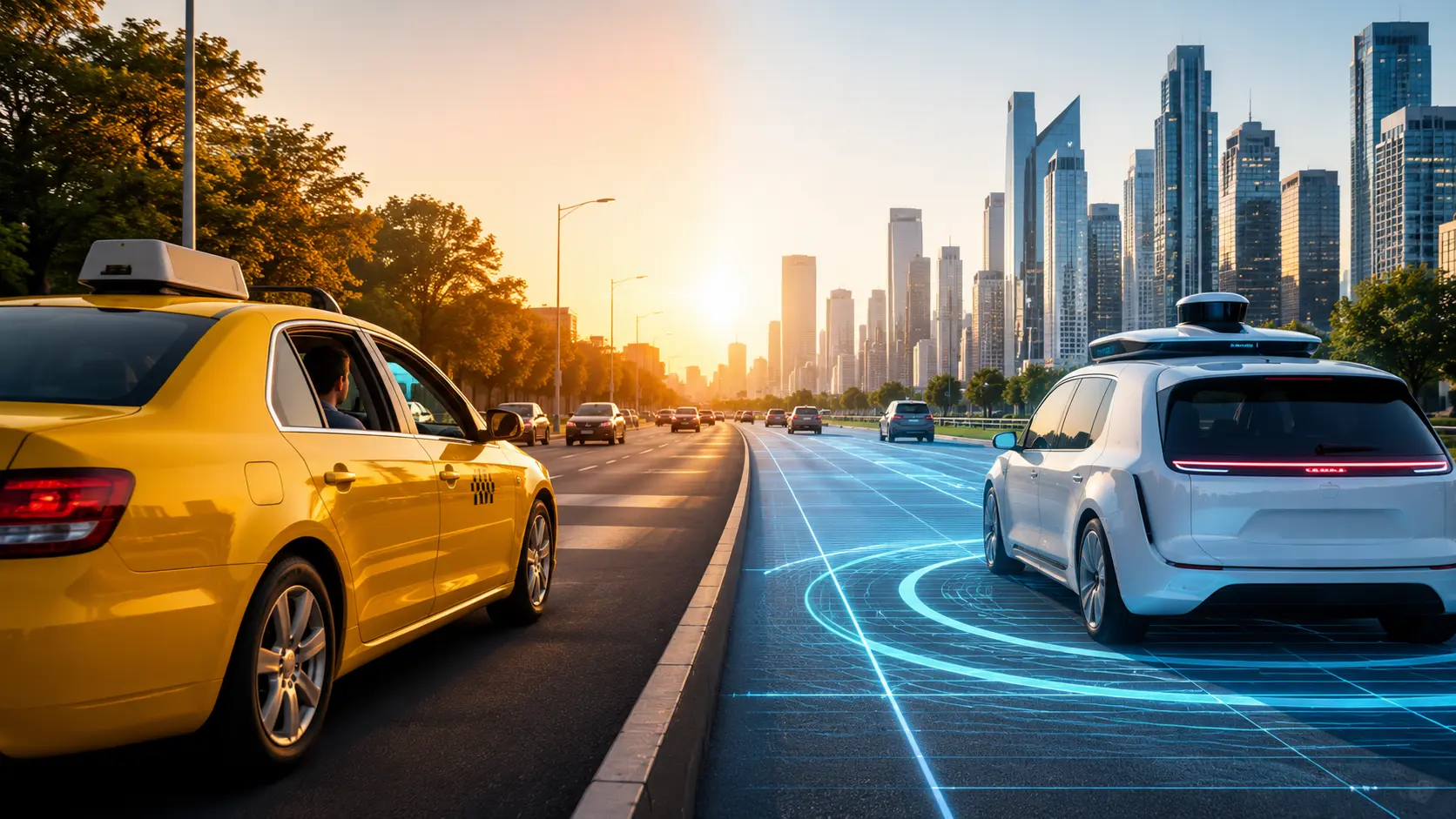
Every few weeks there's another headline: a robotaxi operator adding a new city, a new metro area, a new country. For riders, it's a curiosity. For taxi and fleet operators, it's a question that's getting harder to avoid — what happens to my business when driverless cars start picking up the fares I used to get?
It's a fair question. But it's the wrong one to lose sleep over in isolation, because it assumes robotaxis and taxi fleets are playing the same game. They're not — and understanding the difference is exactly how independent operators, fleet owners, and regional ride-hailing brands stay not just relevant, but ahead.
Autonomous vehicle programs are, for now, narrow by design. They operate in geofenced zones, under specific weather and road conditions, with limited vehicle types, and almost no flexibility for the kind of transportation demand that doesn't fit a template — airport runs with luggage, non-emergency medical transport, corporate accounts with multiple stops, late-night rural pickups, multi-passenger group bookings, or a driver a regular customer specifically trusts.
Taxi and private hire operators aren't competing with robotaxis on "who can drive a car without a human." They're competing on coverage, flexibility, trust, and total cost of getting from A to B in the real world — which, for the vast majority of global markets, autonomous fleets are years away from matching at scale.
That's the opportunity. But only if the operational side of the business is running as efficiently as the automation the headlines are talking about.
The honest risk isn't robotaxis pulling riders away overnight. It's slower and more familiar: manual dispatching that can't keep up with demand spikes, drivers sitting idle while nearby bookings go unmatched, no visibility into which routes or shifts are actually profitable, and a passenger app experience that feels a decade behind the apps riders use for everything else.
Autonomous platforms are, if nothing else, forcing rider expectations upward — instant confirmation, precise ETAs, transparent pricing, zero friction. Fleets that still run on phone bookings, spreadsheets, or dispatch software built for a different era aren't really losing to robots. They're losing to their own operational gap.
Modern dispatch software uses live location data, historical demand patterns, and driver availability to auto-assign the closest, most suitable vehicle in seconds — not minutes. That single change closes most of the perceived "gap" between a taxi booking and a tech-platform booking.
Robotaxi zones are, by nature, limited. A taxi or private hire fleet with strong local coverage — airports, suburbs, corporate parks, medical facilities, events — can serve routes and rider types that autonomous fleets simply can't reach yet. Dispatch software that supports zone-based routing, corporate accounts, and NEMT (non-emergency medical transport) scheduling turns that coverage into a defensible business line, not just a fallback.
This is where white-label matters more than ever. When a rider books through a generic third-party marketplace, the operator owns none of that relationship — no repeat-customer data, no loyalty, no pricing control. A branded passenger app under the operator's own name builds the kind of retention that a fleet can actually build a business around, long after any single ride is over.
Idle time, dead mileage, driver utilization, per-trip cost — these numbers are exactly what large tech-backed platforms optimize obsessively. Independent fleets can do the same with real-time analytics and dispatcher dashboards, without needing a Silicon Valley R&D budget. The tools have simply become accessible.
The operators best insulated from any single competitive threat — autonomous or otherwise — are the ones running more than one revenue stream from the same fleet infrastructure: rides, deliveries, corporate transport, car rental, and paratransit, all dispatched from one system.
Autonomous vehicles will keep expanding — that trend isn't reversing. But expansion into new cities takes years, regulatory approval, weather-proofing, and enormous capital, while a taxi or private hire fleet can upgrade its entire operational backbone in weeks.
The businesses that will still be thriving five years from now aren't the ones hoping robotaxis stay in their lane. They're the ones that already run leaner, faster, and smarter than the fleets around them today.
That's an operational choice, not a fate. And it starts with the dispatch system underneath the business.
Bala
Share Article


Bala serves as a Digital Content Specialist at UnicoTaxi, crafting comprehensive guides and resources tailored for taxi business owners and entrepreneurs. Drawing on extensive experience in mobility and transport tech, he transforms industry insights into practical, actionable strategies for launching, scaling, and thriving in taxi operations.


Get a Fast Response from our Sales Team