


20-08-2026
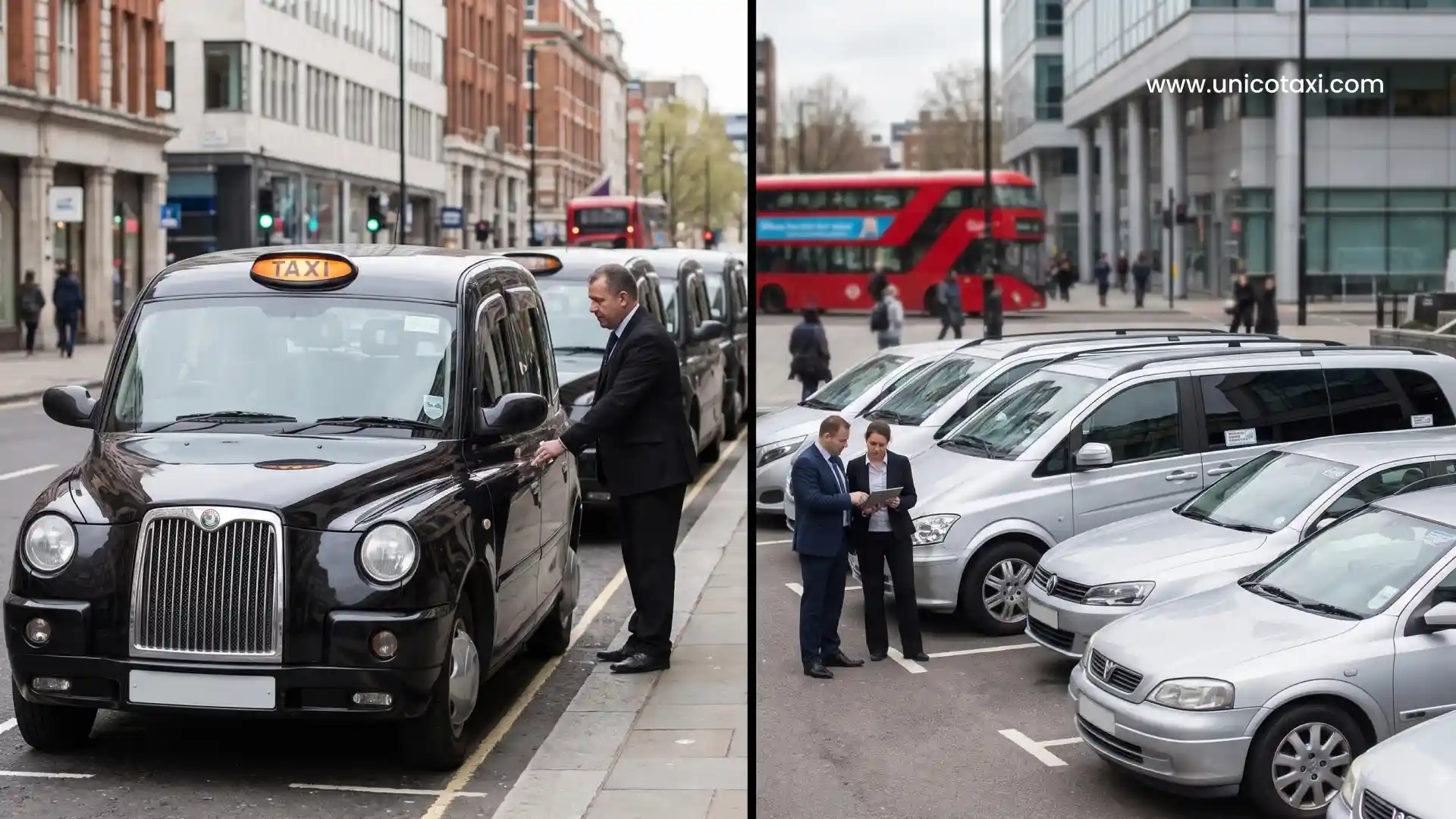
The main difference between a hackney carriage and a private hire vehicle lies in a single legal point: plying for hire. Hackney carriages, which are usually referred to as taxis or black cabs, are licensed to be hailed on the street, picked up from a taxi rank, or booked in advance. Private hire vehicles, typically known as minicabs, can only take passengers after a pre-booking has been made with a licensed operator; they cannot be hailed and cannot wait at taxi ranks.
Almost all of the other differences between the two in respect of taxi licensing in the UK arise from this distinction, whether it be concerning the licensing of the vehicles, the regulation of the drivers, or the kind of booking and record keeping systems that a business is legally required to operate.
The requirements for licensing hackney carriages in the UK are established either by the local licensing authorities or by Transport for London in the capital area. In London, the vehicles have to satisfy certain conditions regarding fitness, one of which is the tight turning circle that is characteristic of the black cabs specially designed for this purpose. Drivers generally have to take a rigorous local knowledge exam, most notably the 'Knowledge of London', as well as undergo enhanced background checks and meet medical fitness requirements.
The system for licensing private hire vehicles in the UK makes use of three different types of licence that all have to work together: an operator's licence for taking bookings, a vehicle licence for each car in the fleet, and a driver's licence for each driver. This is the model that is adopted by most app-based and phone-based companies, since each job must be booked and recorded before the journey starts.
A fleet operator who has hackney carriages in one city cannot merely add private hire vehicles to the same taxi operator licence which UK authorities grant for the other type of vehicle, and the reverse is also true. Separate applications are needed for each type of vehicle, along with their own inspection process and, in many cases, a separate connection with a different section of the local licensing authority.
Among fleet owners who are expanding into new areas, a number of taxi compliance mistakes keep appearing. One of the most frequent and most expensive is to assume that a private hire vehicle can pick up passengers who hail them on the street just as a hackney carriage can, since this may lead to action by the authorities and result in fines. Another mistake is to regard driver background checks as a one-off formality rather than as an ongoing necessity, especially since more authorities now require safeguarding training on child sexual exploitation and county lines awareness.
No matter whether a fleet operates hackney carriages, private hire vehicles, or both, it is advisable to use an appropriate system for keeping records and arranging trips rather than relying on manual methods. Specifically, the rules governing private hire vehicle licensing in the UK require accurate records of bookings in order to prove that each journey had been properly pre-booked, which is why having a structured dispatch and booking system becomes not just a convenience but a necessity for compliance.
There are two separate systems for licensing private hire and hackney carriages for a well-founded reason, since the two types of vehicle differ in the way in which they are permitted to pick up passengers. For fleet owners this distinction affects the standards applicable to the vehicles, the requirements placed on drivers, the fare arrangements, and most importantly the record keeping duties which vary from one licensing authority to another.
On the contrary, each type of vehicle has its own licence accompanied by different conditions, and a vehicle that is licensed for one category is not legally allowed to carry out the functions assigned to the other.
Certainly. Drivers are required to have a licence that corresponds precisely to the type of vehicle they are driving, and since it is permitted by local regulations many drivers do hold two licences so as to be able to drive in both categories.
Correct so licensing is given by individual local authorities or by Transport for London in the capital area, operators who wish to enter a new area therefore have to make a separate application even if they already have a licence elsewhere.
Not at all; UnicoTaxi offers the platform for dispatch, booking, and record-keeping, which enables continuous compliance, but the applications for licences must still be made directly to the appropriate local authority or Transport for London.
This is considered as carrying out work for hire without authorisation, which is against the rules for private hire vehicles and may lead to enforcement action, fines, or a full review of the licence by the relevant local authority.
Satheesh
Share Article


Satheesh is a creative writer at UnicoTaxi, specializing in engaging and informative content about taxi clone apps and mobility solutions. With a strong grasp of the ride-hailing app ecosystem, he excels at turning complex technical concepts into clear, accessible insights. His writing highlights how digital innovations are reshaping taxi and on-demand service businesses. By blending clarity, creativity, and industry knowledge, Satheesh helps transport tech entrepreneurs stay ahead of emerging trends and innovations in the on-demand economy.


Get a Fast Response from our Sales Team