

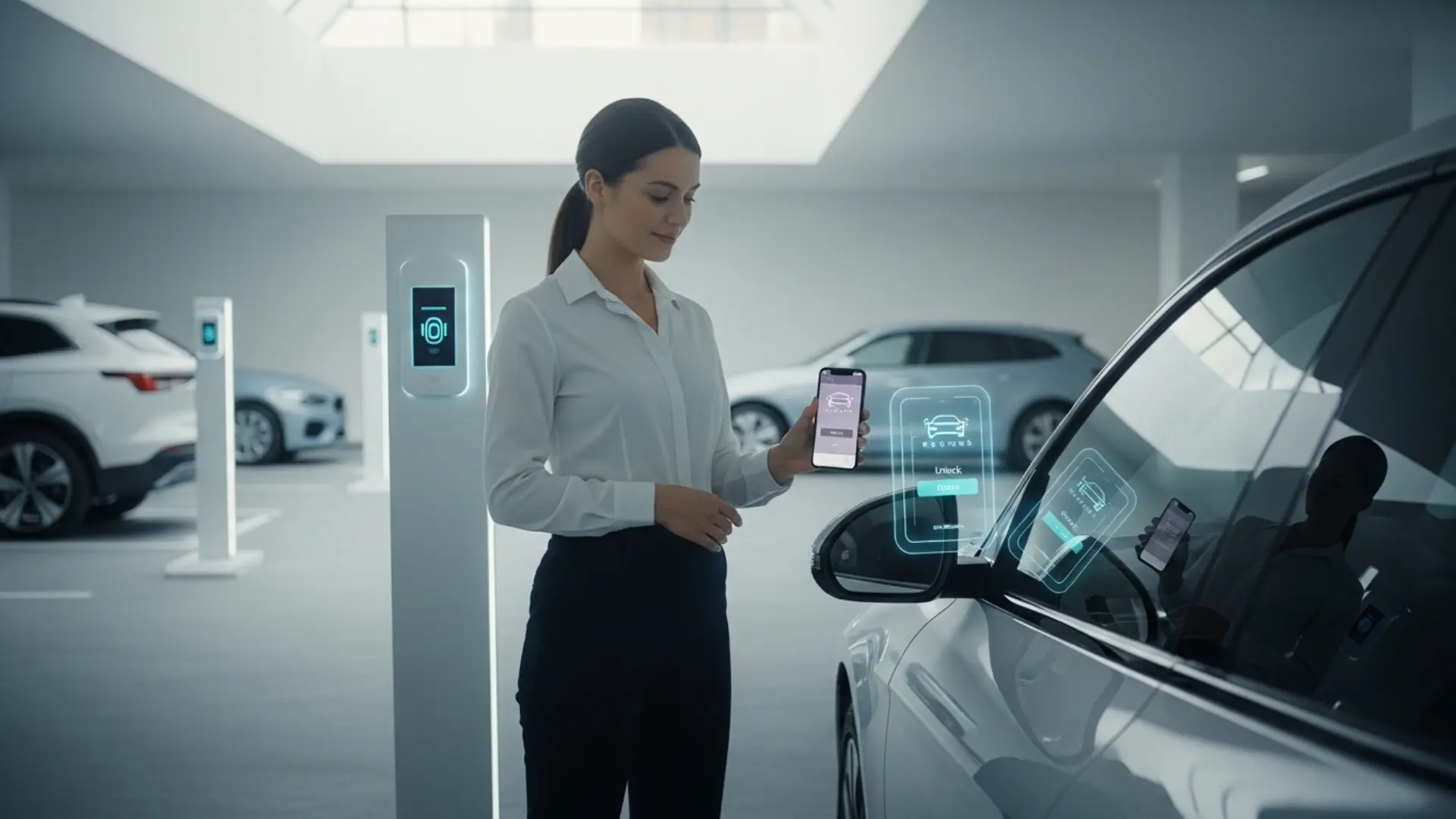

Contactless Car Rentals in the USA | Future Trends 2026

Introduction

The car rental industry in the United States is undergoing a major transformation. What once required long queues at airport counters, paperwork, and in-person verification has now evolved into a seamless, digital-first experience. At the center of this shift is contactless car rental technology.

Driven by customer expectations, mobile innovation, and post-pandemic behavior changes, contactless rentals are redefining how people book, unlock, and return vehicles. For businesses, this is not just a trend—it’s a competitive necessity.

In this blog, we’ll explore how contactless car rentals are reshaping the U.S. market, the technology behind them, and why businesses must adopt solutions like UnicoTaxi to stay ahead.

What Are Contactless Car Rentals?

Contactless car rentals allow customers to complete the entire rental process digitally without interacting with staff.

This includes:

  • Booking vehicles via mobile apps or websites
  • Digital identity verification
  • Keyless vehicle access
  • Online payments and invoicing
  • Remote vehicle tracking and return
Platforms like Turo and Zipcar have already popularized this model across the U.S., setting new standards for convenience and efficiency.

Why Contactless Rentals Are Growing Rapidly in the U.S.?

1. Changing Customer Expectations

Modern users expect everything to be:

  • Instant
  • Mobile-first
  • Self-service

Apps like Uber have conditioned customers to expect fast, frictionless experiences. Car rental businesses must now match that level of convenience.

2. Post-Pandemic Behavioral Shift

After COVID-19, customers prefer:

  • Minimal physical interaction
  • Touch-free transactions
  • Digital documentation

Contactless rentals provide a safer and more hygienic alternative to traditional rental processes.

3. Rise of Mobile Technology

Smartphones have become the primary interface for mobility services. With mobile apps, users can:

  • Locate nearby vehicles
  • Unlock cars via Bluetooth or IoT
  • Extend rentals instantly

This has made contactless rentals not just possible—but highly scalable.

Key Technologies Powering Contactless Rentals

1. Keyless Entry Systems

Customers can unlock vehicles using:

  • Mobile apps
  • QR codes
  • Bluetooth connectivity

This eliminates the need for physical keys and manual handovers.

2. GPS & Real-Time Tracking

Fleet operators can:

  • Monitor vehicle location
  • Track usage patterns
  • Improve fleet utilization

3. AI-Based Automation

AI helps in:

  • Demand prediction
  • Smart pricing
  • Fraud detection
  • Customer behavior analysis

4. Cloud-Based Platforms

Cloud systems enable:

  • Remote fleet management
  • Multi-location operations
  • Real-time data access

Benefits of Contactless Car Rentals for Businesses

1. Reduced Operational Costs

  • No need for large front-desk teams
  • Automated booking and billing
  • Lower infrastructure costs

2. Higher Booking Conversions

  • Faster booking process
  • 24/7 availability
  • Reduced friction leads to more bookings

3. Scalability Across Regions

Businesses can expand across multiple U.S. cities without setting up physical offices.

4. Improved Fleet Utilization

Smart systems ensure:

  • Better vehicle allocation
  • Reduced idle time
  • Increased revenue per vehicle

Top Benefits for Customers

Convenience

No waiting in lines or dealing with paperwork.

Instant Access

Users can unlock and start the ride within minutes.

Seamless Payments

Fully digital transactions with transparent pricing.

Full Control

Users manage bookings, extensions, and returns via mobile apps.

Impact on Traditional Car Rental Companies

Major players like Hertz and Enterprise Rent-A-Car are rapidly investing in digital transformation to stay competitive.

Traditional rental models are shifting toward:

  • Self-service kiosks
  • Mobile-first booking systems
  • Hybrid contactless solutions
Businesses that fail to adapt risk losing market share to tech-driven competitors.

Challenges in Contactless Car Rentals

While the benefits are significant, there are some challenges:

Security Concerns

  • Data privacy risks
  • Vehicle misuse or fraud

Initial Investment

  • IoT hardware installation
  • App development costs

Customer Trust

Some users still prefer human interaction, especially for high-value rentals.

How UnicoTaxi Enables Contactless Car Rental Solutions in the USA Market?

UnicoTaxi is designed to help businesses transition into a fully digital, contactless rental ecosystem.

Key Features:

  • White-label mobile apps (iOS & Android)
  • Keyless vehicle integration support
  • Real-time fleet tracking
  • Automated booking & dispatch system
  • Multi-location management
  • Custom pricing & subscription models

Why Contactless Car Rentals Are the Future?

The U.S. car rental market is moving toward:

  • Fully automated operations
  • AI-driven decision-making
  • On-demand mobility services

Contactless rentals align perfectly with these trends, offering:

  • Better user experience
  • Higher efficiency
  • Long-term cost savings

Bottom line

Contactless car rentals are no longer a futuristic concept—they are the new standard in the U.S. mobility market. As customer expectations evolve and technology advances, businesses must adapt to stay competitive.

By adopting advanced solutions like UnicoTaxi, car rental companies can:

  • Streamline operations
  • Increase revenue
  • Deliver superior customer experiences

The future of car rentals is digital, automated, and contactless—and the time to embrace it is now.

Hey, Are you planning to setup a Car rental business in the United States but looking for a better Car rental management software?

Lets Schedule a Personalized Call Today (its FREE)

About the Author

avatar

Bala

Share Article

Bala serves as a Digital Content Specialist at UnicoTaxi, crafting comprehensive guides and resources tailored for taxi business owners and entrepreneurs. Drawing on extensive experience in mobility and transport tech, he transforms industry insights into practical, actionable strategies for launching, scaling, and thriving in taxi operations.