


30-07-2026
Many business owners are unaware of the costs until they see the numbers. Last mile delivery now accounts for the journey, the costliest part of the entire supply chain.
Part of the issue is basic math. A truck moving one full load between two hubs operates efficiently. In contrast, a van makes forty separate 3% of total shipping costs, increasing from 41% just a few years ago. This makes the short leg of stops throughout a spread-out neighborhood is not efficient. More stops mean longer idle times, increased fuel consumption per package, and a higher chance for disruptions from events like road closures or late orders.
In simple terms, AI-Powered Route Optimization uses artificial intelligence to create and continuously adjust delivery routes based on current conditions, rather than relying on a set plan made the night before.
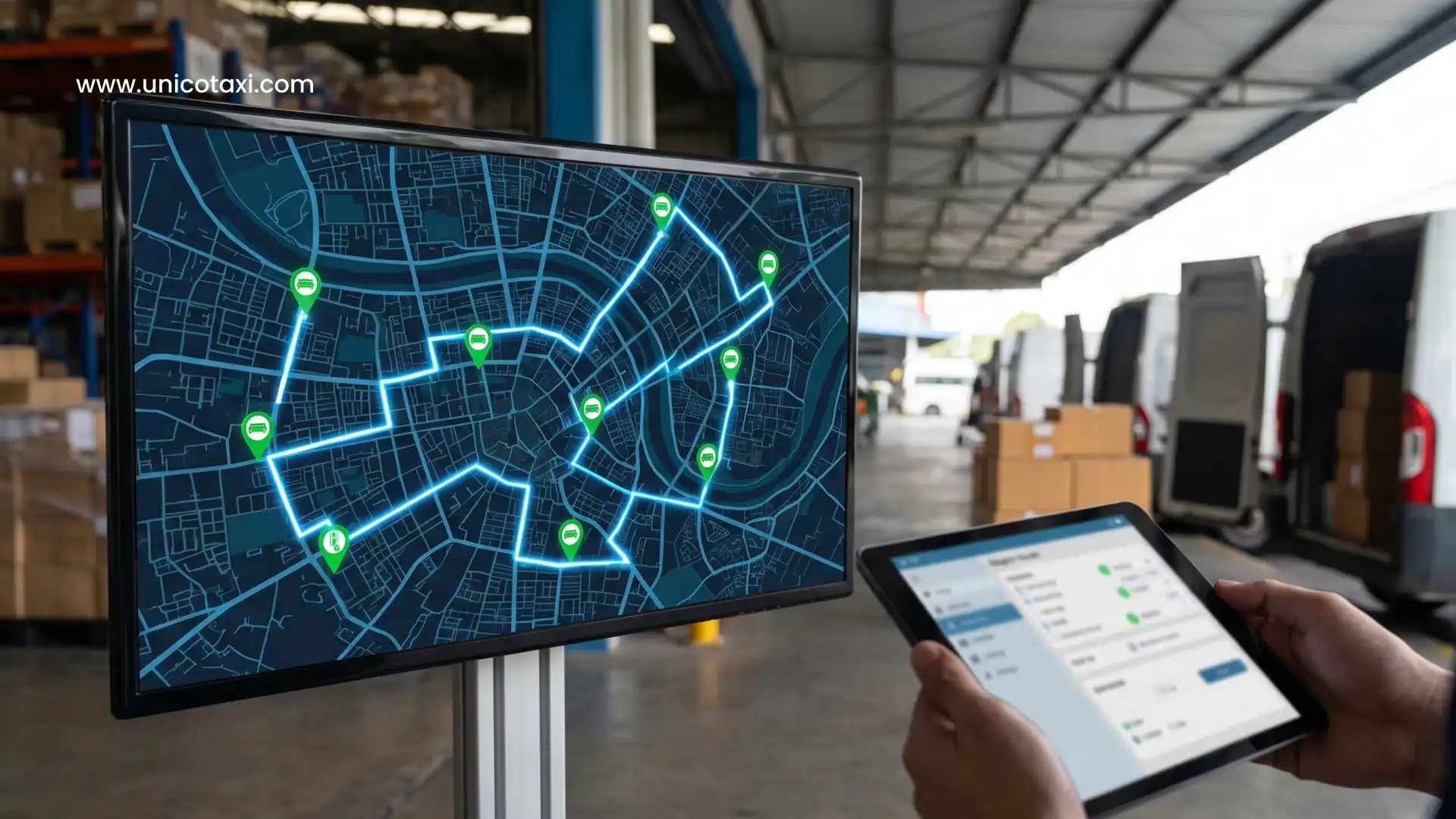
Traditional route planning, even with basic GPS or standard delivery management software, typically maps a route once and expects the driver to stick to it. If traffic worsens or a stop takes longer than planned, the whole day falls behind. AI-Powered Route Optimization functions differently. It constantly recalculates the best stop order based on real-time traffic, delivery windows, vehicle capacity, and driver location, keeping the plan aligned with what is actually happening on the road.
The multi stop problem, often called the traveling salesman problem, revolves around one key question: Out of many possible stops, what is the most efficient order to visit them?
A human dispatcher can manage this for maybe ten or fifteen stops before it becomes too complex. AI Logistics Management Software can assess thousands of combinations in seconds. It continuously re-optimizes as new orders come in or conditions shift mid route, serving as an intelligent dispatch system that enhances the route throughout the day, stop by stop.
Implementing logistics route optimization results in tangible improvements in daily operations, not just a list of features.
Check your average cost per delivery now. This gives you a starting point to compare later.
Evaluate how often deliveries fail due to wrong addresses or missed time, as this is a quick fix for route optimization.
Start optimizing with the busiest routes first; this is where the multi-stop problem is costing you the most.
AI-Powered Route Optimization offers real benefits, but a few things matter first. Your data must be accurate, as inconsistent addresses, time windows, or vehicle details limit the system's effectiveness. The software needs to integrate well with your current systems, since the best last-mile delivery software works seamlessly with existing order management without requiring a complete workflow overhaul. Lastly, drivers must be comfortable using it, since even the best Intelligent Dispatch System cannot help much if they are uncomfortable following the routes it generates.
AI-based dispatch is quickly becoming normal, not just a nice extra. Future systems will guess busy periods, like holidays or big local events, before the orders even arrive, and prepare for them early. They will also connect better with customer messages, so customers see a live arrival time instead of a rough guess. Businesses that start using Last-Mile Delivery Optimization now will be ready to grow later without rebuilding everything from scratch.
The technology behind AI-Powered Route Optimization is not limited to taxis and ride-hailing services; it addresses the same fundamental issue of getting a vehicle to the right location at the right time efficiently.
UnicoTaxi's dispatch engine, initially designed for managing ride-hailing fleets, applies that same AI-driven routing logic to delivery and logistics operations. It handles multi stop planning, real-time rerouting, and live fleet tracking from one interconnected system, whether vehicles on the road are transporting passengers or packages. For businesses exploring AI Logistics Software, UnicoTaxi demonstrates how this technology looks when it is effectively implemented.
The multi stop problem has always existed, but it has recently only become something businesses can actually solve instead of just manage. AI-Powered Route Optimization transforms a problem reliant on a dispatcher's intuition into a calculated, monitored, and constantly evolving process. For delivery and logistics companies facing the pressure of rising last-mile costs, this isn't a future upgrade to consider; it's a current divide between businesses adapting now and those losing profit on every route.
AI-Powered Route Optimization uses artificial intelligence to plan and continuously adjust delivery routes based on real-time traffic, delivery windows, and vehicle capacity. It does not rely on a fixed route planned in advance.
Regular GPS provides directions for a predetermined route. AI-Powered Route Optimization determines the best order of stops from the beginning and continues adjusting that order as conditions change throughout the day.
Yes, even a fleet of five vehicles can benefit from the same real-time routing logic as a fleet of five hundred.
Not entirely. It removes the manual effort involved in planning routes, but dispatchers will still manage exceptions and customer communication that the software cannot handle alone.
Many businesses see noticeable improvements in fuel costs and on-time delivery rates within the first few weeks, though results vary based on fleet size and the accuracy of delivery data.
Satheesh
Share Article


Satheesh is a creative writer at UnicoTaxi, specializing in engaging and informative content about taxi clone apps and mobility solutions. With a strong grasp of the ride-hailing app ecosystem, he excels at turning complex technical concepts into clear, accessible insights. His writing highlights how digital innovations are reshaping taxi and on-demand service businesses. By blending clarity, creativity, and industry knowledge, Satheesh helps transport tech entrepreneurs stay ahead of emerging trends and innovations in the on-demand economy.


Get a Fast Response from our Sales Team